President Donald Trump convened his top national-security officials in the White House Situation Room to consider a significant expansion of U.S. military operations against Iran, according to Axios, as Washington weighs attacks on strategic infrastructure and Tehran's Houthi allies threaten to squeeze global shipping at two of the world's most important maritime chokepoints.
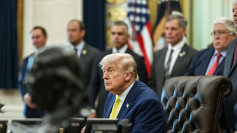
The meeting brought together Vice President JD Vance, Secretary of State Marco Rubio, Defense Secretary Pete Hegseth, Chairman of the Joint Chiefs of Staff Gen. Dan Caine and other senior officials. Axios reported that discussions centered on potential targets inside Iran if the latest confrontation continues to escalate.
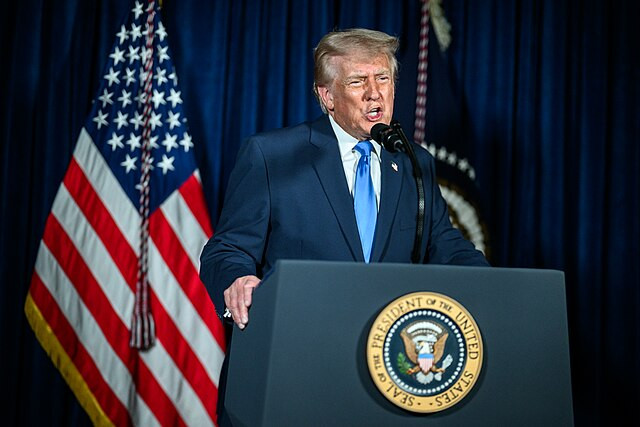
Trump signaled before the meeting that the next stage of the U.S. campaign could move beyond the military systems Washington has targeted in recent days and extend to Iran's civilian infrastructure.
"Next week it gets really bad for them," Trump told Fox News' Trey Yingst. "Next week comes the power plants, next week comes the bridges. We're going to knock out all of their power plants. We'll knock out all of their bridges unless they get to the table and negotiate."
The warning marks a potentially consequential shift in the scope of U.S. operations. Recent American strikes have largely focused on air-defense and radar systems, anti-ship missile positions and drone launch sites that U.S. officials say Iran has used to threaten vessels transiting the Strait of Hormuz.
U.S. Central Command said Wednesday that American forces had launched another wave of attacks "designed to further degrade military capabilities Iranian forces have used to attack commercial shipping" in the strait.
Iran has responded by continuing attacks against U.S. bases in Jordan, Kuwait and Bahrain, according to the reports. The exchanges have turned the security of the Strait of Hormuz into a central objective of the U.S. campaign and raised the risk that a confrontation initially centered on shipping could broaden into strikes against critical national infrastructure.
The pressure on global commerce may also be expanding beyond the Persian Gulf.
Reuters reported that Iran could use its Houthi allies in Yemen to threaten the Bab el-Mandeb Strait, the narrow passage connecting the Red Sea and Gulf of Aden. Such a strategy would allow Tehran and allied forces to place simultaneous pressure on shipping routes at opposite ends of the Arabian Peninsula.
The Strait of Hormuz and Bab el-Mandeb are among the world's most strategically important maritime corridors. The first is a major artery for global oil exports from the Persian Gulf, while the second is critical to commercial traffic moving between the Indian Ocean and the Suez Canal.
A coordinated disruption of both routes could force shipping companies to reroute vessels, increase insurance and freight costs and place renewed upward pressure on global energy prices.
The latest warning came from Mohammed al-Farah, a member of the political bureau of Yemen's Ansarullah movement, commonly known as the Houthis. Reuters cited remarks carried by Iran's Press TV in which al-Farah threatened a wider maritime campaign if Saudi Arabia continued military operations against Yemen.
"If the current situation aggravates, the Bab el-Mandeb Strait and the Strait of Hormuz will be closed in an operational alliance," al-Farah said.
He further warned that oil prices could rise as high as $200 per barrel if both waterways were shut.