Vice President JD Vance accused some members of the Israeli government of attempting to undermine U.S. diplomatic efforts with Iran, alleging they sought to influence American public opinion to derail negotiations that Washington believed could reduce regional tensions.
Speaking on The Joe Rogan Experience, Vance said certain Israeli officials opposed the Trump administration's diplomatic outreach to Tehran and backed efforts to weaken support for the negotiations. His remarks represent one of the strongest public criticisms by a senior Trump administration official of elements within Israel's leadership since the latest conflict with Iran began.
The comments come as U.S.-Iran diplomacy remains under strain despite continued contacts through international mediators. Last month, Washington and Tehran signed a memorandum of understanding intended to preserve formal negotiations, establish a 60-day ceasefire and outline steps toward reopening the Strait of Hormuz. The ceasefire has since collapsed, while military operations by both sides have resumed.
During the podcast interview, Vance distinguished between what he described as legitimate foreign lobbying and the responsibility of U.S. policymakers to make independent national security decisions.
Vance said he trusted some Israeli officials but believed others had supported a coordinated campaign to block the agreement with Iran. He argued there was "exact evidence" that certain members of the Israeli government opposed the negotiations and wanted to prevent the deal from succeeding.
According to Vance, his primary concern was not that foreign governments attempt to influence U.S. public opinion, but whether American leaders allow those efforts to shape U.S. policy.
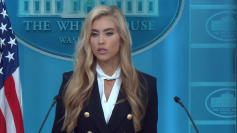
Asked about the vice president's remarks, White House Press Secretary Karoline Leavitt said President Donald Trump would agree that foreign governments routinely attempt to influence public opinion inside the United States. Her comments did not directly address Vance's allegations regarding specific Israeli officials.
Vance has played a central role in the administration's diplomatic engagement with Iran. He participated in negotiations held in Pakistan in April before traveling to Switzerland in June, where representatives from Washington and Tehran signed the memorandum intended to preserve the negotiating framework despite continuing hostilities.
The diplomatic effort has unfolded alongside an expanding military confrontation. The conflict escalated after the United States and Israel launched large-scale strikes against Iran in February. Tehran responded by attacking Israel and U.S.-aligned countries across the Gulf, while violence has also spread into Lebanon.
Although negotiations remain active through intermediaries, recent attacks near the Strait of Hormuz have underscored the fragility of the diplomatic process. U.S. forces have continued striking Iranian targets, while Tehran has launched additional attacks against American interests and regional allies.
Israel has continued to oppose the current diplomatic framework, maintaining that Iran represents an existential security threat. Israeli leaders have repeatedly argued that any long-term agreement should include the complete dismantling of Iran's nuclear and missile programs, along with broader political changes inside Tehran.
Vance has previously cautioned Israeli politicians against publicly criticizing Washington's efforts to extend ceasefire negotiations, arguing that the United States remains Israel's most important international partner even when the two governments disagree over diplomatic strategy.
On Wednesday, the House of Representatives rejected legislation that would have ended billions of dollars in U.S. assistance to Israel. The proposal failed by a vote of 314 to 104, though several Democratic lawmakers supported reducing military aid, reflecting growing divisions within parts of the party over U.S. policy toward Israel.