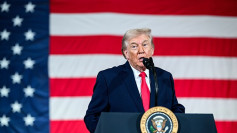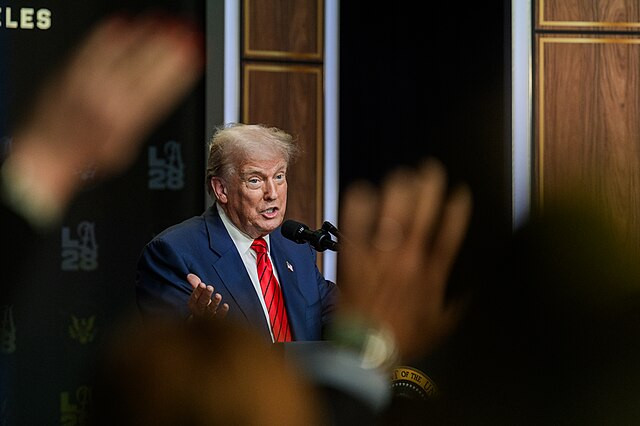
President Donald Trump intensified his long-running confrontation with major U.S. broadcasters on Thursday, calling for ABC and NBC to lose their broadcast licenses after the networks declined to carry his primetime speech on election integrity live over their main television channels.
Speaking after the address, Trump accused the two networks of suppressing information about election security and argued that their editorial decisions reflected political bias rather than journalistic judgment. His comments immediately renewed debate over press freedom, broadcast regulation and the limits of presidential influence over licensed television stations.
"Fraud like this should mean a revocation of their licenses," Trump said. "They use our public multi-billion-dollar-in-value airways for absolutely no money. They pay nothing. All we want is honesty in our elections and honesty in reporting."
Trump also alleged that the networks' programming decisions formed part of a broader effort to conceal election fraud, though he offered no evidence to support that claim.
"They and others in the media are part of a plot," Trump said. "They want to continue this fraud for whatever reason. They want to keep it going. They want to protect the radical left."
The dispute began before Trump delivered his remarks. According to people familiar with the matter, the White House had requested airtime from the four major broadcast networks earlier in the week. By Thursday, however, ABC and NBC had opted not to interrupt their regular primetime schedules to carry the speech live on their flagship broadcast channels.
Neither network publicly explained its decision. Instead, both made the address available through their digital news platforms.
ABC streamed the speech on ABC News Live and carried it through its radio network, while NBC aired the event on NBC News NOW before broadcasting a special report after Trump's remarks concluded.
The White House sharply criticized those editorial choices. Communications Director Steven Cheung accused the broadcasters of intentionally preventing viewers from hearing the president's message.
"Cowards. NBC and ABC don't want you to hear the truth," Cheung wrote on X, encouraging viewers to watch the speech through official White House channels.
Other television organizations handled the event differently, highlighting the varied editorial approaches taken across the news industry.
- Fox News carried Trump's speech live. Following the address, anchor Bret Baier noted that the network had not independently verified Trump's claims regarding electronic voting machines and was not in a position to confirm their accuracy.
- CBS interrupted its regular programming with a special report, broadcasting portions of the speech while reminding viewers of Trump's documented history of making false claims regarding election security.
- CNN declined to carry the address live. Anchor Kaitlan Collins said the decision reflected Trump's "well-documented history of saying blatantly false things about elections."
- MSNBC initially aired part of the speech before cutting away to provide live fact-checking.
Trump's latest criticism also arrives as the Federal Communications Commission has already been examining issues involving ABC under Chairman Brendan Carr.
Carr previously sought an early review of eight ABC broadcast station licenses during an inquiry into the company's diversity practices. He has also reviewed whether ABC's daytime program The View complied with the FCC's equal-time rule, though ABC has maintained the program qualifies for a longstanding exemption under federal regulations.
Neither ABC, NBC nor the FCC immediately responded to requests for comment following Trump's remarks.
Although the FCC oversees licensing for broadcast television stations, legal scholars have long argued that revoking licenses because of editorial decisions would raise substantial First Amendment issues. U.S. broadcast licensees are generally expected to serve the public interest, but federal law also provides broad constitutional protections for editorial independence and freedom of the press.