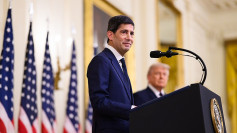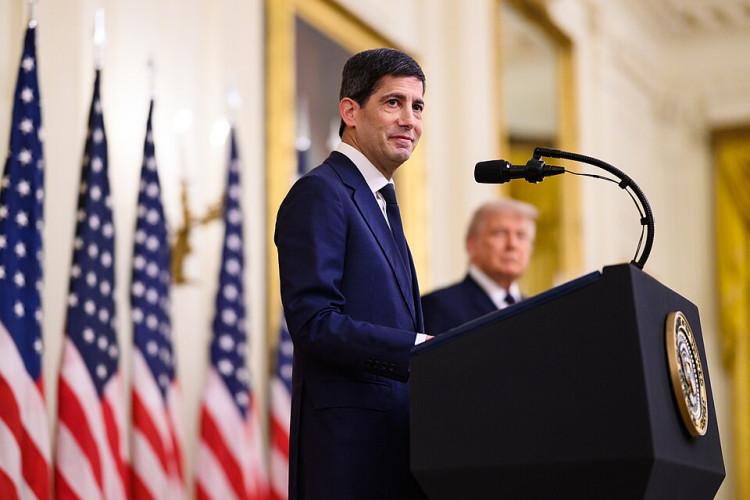
Federal Reserve Chair Kevin Warsh is expected to back the central bank's first interest-rate increase in three years Wednesday, a move that would put monetary policy at odds with President Donald Trump's repeated demands for lower borrowing costs as stubborn inflation and a surge in Treasury yields pressure the Fed to act.
A quarter-point increase would lift the Fed's benchmark rate to roughly 3.9%. Financial markets have largely priced in such a move after inflation remained well above the central bank's 2% goal and Warsh used a high-profile speech last month to signal that higher rates could be necessary.
The decision presents an early test for Warsh, who took over the Fed in May. Trump has continued to argue that U.S. interest rates should be lower and said Sunday that no country should have borrowing costs below those of the United States.
Warsh has increasingly emphasized inflation risks since becoming chairman. The Fed's preferred inflation measure reached 3.7% in July, according to the Associated Press, while core inflation, excluding volatile food and energy prices, stood at 3.3%. The increases followed a sharp rise in energy costs tied to the Iran conflict and came after inflation had fallen to 2.3% in April 2025.
The bond market has added urgency. The yield on the 10-year Treasury note has climbed to around 5%, a level that has pushed up mortgage rates and borrowing costs even before the Fed has changed its policy rate. Reuters reported Wednesday that investors remain broadly positioned for a 25-basis-point increase.
Economists say that creates an unusual risk for the Fed: keeping short-term rates unchanged could actually result in tighter financial conditions if investors conclude the central bank isn't responding aggressively enough to inflation.
"That is the paradox: A hike now could lower long-term rates later," Diane Swonk, chief economist at KPMG, wrote in an email cited by the Associated Press. "Restore faith in the 2% target, then the inflation premium can fall. Fail, and markets will tighten instead through higher mortgage rates, business borrowing costs and interest on the debt."
Warsh encountered a version of that problem in July. After the Fed left rates unchanged despite his tougher rhetoric on inflation, longer-term Treasury yields moved higher, according to the AP. The rise has continued into September, with mortgage rates also climbing as investors demand additional compensation for inflation and fiscal risks.