The White House launched a round-the-clock streaming channel devoted to President Donald Trump on Monday, September 21, just days after barring CNN, MS NOW and Politico from presidential coverage. The debut of Trump TV came amid a lawsuit over the restrictions and a suspension of television press pool coverage that left one of the president's public appearances without usable audio on the White House's own video feed.
The new channel, called "TRUMP TV: The Essentials Station," began streaming on YouTube at 7 p.m. Eastern. It features presidential speeches, administration announcements and archived footage, giving the White House a continuous platform for distributing its own selection of material.
Its initial audience declined sharply during the first several hours. According to The Daily Beast, approximately 8,000 people watched shortly after the launch, but the number fell below 4,000 within about 90 minutes and stood at roughly 3,000 by 9 p.m.
The outlet reported that the audience had dropped to 2,425 by approximately 10:40 p.m. and later fell below 1,000 while the channel broadcast an archived presidential address. Those figures reflect concurrent viewers during the channel's opening hours, rather than its total audience or longer-term performance.
The White House presented the service as a way to make presidential appearances and administration announcements available in one place. Deputy Assistant to the President Kaelan Dorr described it as a 24-hour stream of the administration's highlights, saying the channel would offer viewers material without relying on conventional news coverage.
The timing prompted criticism online, particularly because the launch followed Trump's September 18 decision to exclude three news organizations from the White House. Lawyer and TikTok commentator Aaron Parnas questioned whether the new channel and the restrictions were connected, characterizing Trump TV as taxpayer-funded, government-run media.
Other social media users suggested that the administration wanted greater control over how its activities were presented. Some compared the project to state-controlled broadcasting in North Korea, while others urged viewers to avoid the channel. The comments reflected critics' interpretations of the launch; there is no established evidence that the White House imposed the media restrictions specifically to prepare for Trump TV.
The dispute over access had already produced a significant disruption to presidential coverage. CNN, MS NOW and Politico filed a federal lawsuit Monday, arguing that the White House had violated their First Amendment rights and denied them due process by revoking their access because of their reporting.
Trump defended the exclusions, accusing the organizations of publishing false information and rejecting the allegation that his administration was attacking press freedom. The White House maintained that the outlets could continue reporting from outside its grounds.
The restrictions also affected news organizations that had not been banned. After CNN was removed from its scheduled television pool assignment, ABC, CBS, Fox News and NBC declined to provide a replacement, suspending the rotating arrangement through which major networks share video of presidential events.
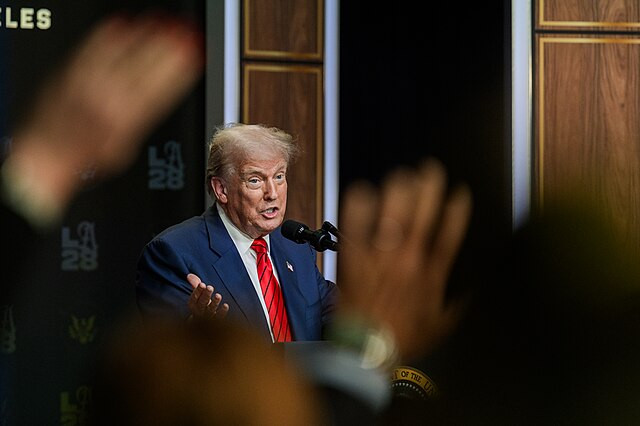
The consequences became apparent during a Monday ceremony at the White House's new helipad. Trump spoke near a helicopter, but the administration's video feed did not provide usable audio of his remarks. The usual independent television pool was not present to supply its own recording, although news organizations retained other avenues for covering presidential activities.
The television pool ordinarily allows five major networks to divide the cost of following the president and distribute footage to other broadcasters. Its suspension affects events designated for pooled presidential coverage, rather than all reporting from Washington or every appearance by Trump.
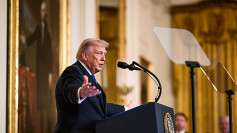
Trump TV's first broadcasts, meanwhile, drew heavily on previously recorded material, including a speech at Mount Rushmore and footage from the president's 2025 inauguration. The channel was promoted as a continuously updated service, although its launch did not establish whether it would regularly provide live coverage of presidential events.
The White House's growing reliance on its own footage has become part of the dispute between the administration and news organizations. The three excluded outlets are seeking judicial relief, while the television networks' decision to suspend pooled coverage has reduced the availability of independently recorded video from events where access is restricted.