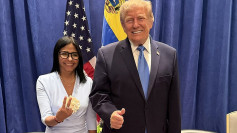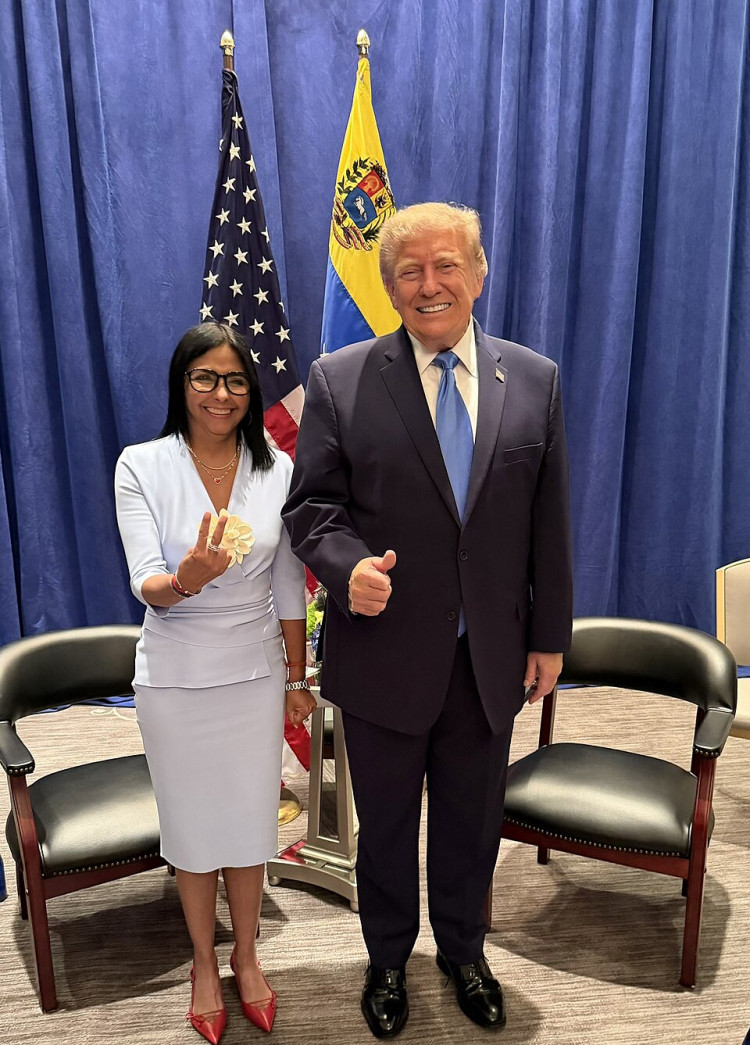
Venezuela's interim President Delcy Rodríguez pledged to hold national elections but offered no timetable, following a meeting with President Donald Trump in which he pressed her to move toward a democratic transition. The exchange at the United Nations General Assembly in New York came as Washington expanded its economic relationship with Caracas, particularly through agreements involving Venezuela's vast oil reserves.
"I want to make this very clear at this General Assembly: there will be elections in Venezuela," Rodríguez said in her address. She also pledged to prepare the country's institutions for a vote and allow political groups to participate, without specifying when Venezuelans would go to the polls.
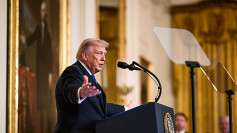
Trump raised the election issue during a roughly 15-minute meeting with Rodríguez on the sidelines of the General Assembly, according to Axios, citing sources briefed on the discussion. "You have to have elections at the end of the day," Trump told her, according to one of those sources.
The meeting marked their first face-to-face encounter since U.S. forces captured former Venezuelan President Nicolás Maduro in January. Rodríguez, who assumed power following Maduro's removal, has since developed a working relationship with the Trump administration, opening the door to renewed diplomatic engagement and American investment.
Trump thanked Rodríguez for their cooperation during the meeting, while emphasizing the importance of eventually holding elections. According to Axios, he did not demand a specific election date, leaving the timing of Venezuela's political transition unresolved.
Rodríguez presented her government's plans as an effort to rebuild the country's political institutions after years of confrontation between the government and opposition.
"Venezuela has initiated a process of democratic transformation for its rebirth, an orderly, institutional, and verifiable process, to build a country that is freer for all, more prosperous, and more reconciled with itself," she said.
Her administration has begun discussions with opposition groups and says it intends to establish conditions for their participation in future elections. However, questions remain about whether opposition leaders will be permitted to return to Venezuela and participate freely in the political process.
Opposition leader María Corina Machado, who left Venezuela earlier this year to receive the Nobel Peace Prize, has said she has been prevented from returning to the country. She is currently living in exile in Panama, highlighting an unresolved issue in Rodríguez's promise to accommodate competing political forces.
The diplomatic discussions have unfolded alongside a substantial expansion of U.S. involvement in Venezuela's energy industry. The Trump administration has encouraged American companies to develop the country's oil reserves, seeking to revive production after years of declining output and limited investment.
One of the largest proposed projects involves North American Blue Energy Partners, which announced an agreement giving the U.S. government rights to a 35% ownership stake in the company. The arrangement also provides Washington with preferential access to 20% of future crude production at cost, while NABEP retains operational control.
The company has outlined plans for approximately $100 billion in investment to expand Venezuelan oil production. The agreement covers projects involving the Lake Maracaibo region and the Orinoco Oil Belt, where Venezuela holds much of its enormous crude reserves.
Chevron is also pursuing an expansion of its Venezuelan operations. The company has outlined a multibillion-dollar investment strategy intended to increase production by 2031, including development of additional oil fields.
Continental Resources, the Oklahoma-based producer founded by billionaire Harold Hamm, has separately signed a memorandum of understanding with Venezuela's state oil company, PDVSA, to develop the Ayacucho-2 block in the Orinoco Belt. The agreement establishes a framework for the companies to negotiate a longer-term production arrangement.
The proposed development covers approximately 126,000 acres and contains an estimated 30 billion barrels of oil reserves, according to Continental. Venezuela's broader Orinoco Belt accounts for much of the country's estimated 303 billion barrels of proven crude reserves.
Despite that resource base, years of economic difficulties, deteriorating infrastructure and restricted access to foreign investment have sharply reduced Venezuelan oil production from its historical levels. American energy companies have consequently approached new investment opportunities with varying degrees of caution, weighing the potential returns against legal, political and operational risks.
Rodríguez's visit to New York has also included discussions with international financial institutions and prospective investors. Her delegation has sought to attract financing and negotiate agreements that could support Venezuela's economic recovery, while the Trump administration continues to press for a political transition without publicly establishing a deadline for elections.