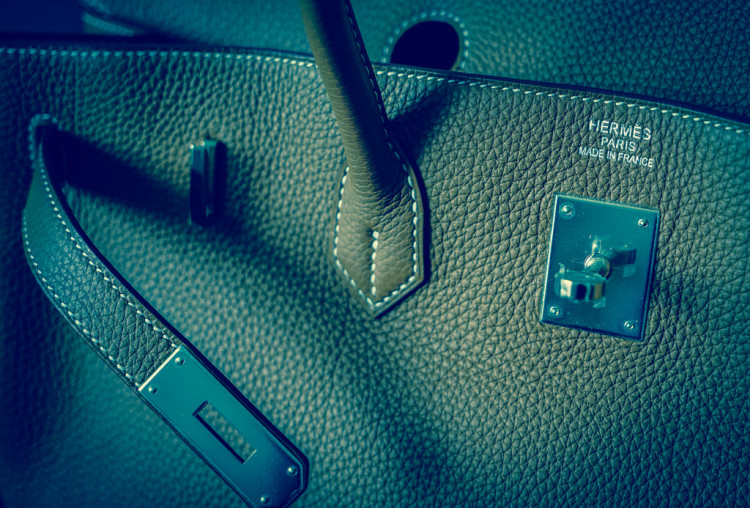
Aside from being the world's biggest consumer market for luxury goods, China is also known for being one of the biggest producers of fake products. Two of the most counterfeited products in the market are Hermès and Chanel bags. Some even have the same look as the original, but there will always be a difference. So here are some tips on how to spot the authentic brand from the fake ones.
Head of the authentication for pre-owned fashion marketplace Vestiaire Collective Victoire Boyer Chammard plays an important role in the industry to check every luxury brands posted to the website. She said that spotting counterfeit products are even harder today as there are now fake authentication companies in China to make their products look more credible.
Chammard added that since she joined Vestiaire Collective in 2014, the counterfeiting business has grown, especially with the prevalent use of social media today. When a luxury brand introduces a new product, expect counterfeiters to release the same item in just a couple of weeks.
"A counterfeiter can always make a mistake, and it's our job to find that," Chammard said, via the South China Morning Post. So to know if the product you plan to buy is authentic, you must check if it even exists, and if it has the same "DNA of the house." Products with no labels can still get authenticated with its buttons, tweed, and lining, among others. Here are some of the things you should look for to authenticate your Hermès and Chanel bags.
Hermès
According to Baghunter, Hermès uses unique colors in creating its bags. It is even using crocodile skin that takes a decade to dry out, and different types of leathers. So if the bag's color looks like painted or a shade lighter or darker, it is probably forged.
Hermès bags also come in 25cm, 30cm, 35cm, 40cm, and 45cm sizes, never in 20cm and 55cm. It also stands on its own without slouches and bulges. Its handle, on the other hand, maintains its upright position without any bending while fake ones do not stand correctly.
The bags also have two stamps, the Hermès logo at the front and at the back that indicate the year it gets created and the materials used. It is always embossed and not printed or pressed in like the counterfeit ones. It is also placed just below the stitching and not too far away.
Rare Hermès bags have "brushed gold, silver, brushed silver, or ruthenium finishes" hardware. Some of it doesn't tarnish while others taint but never peel. Its zipper carries the brand name or just a letter H at its base. At all times, it is parallel to the zipper line while the fake ones flop down.
Authentic Hermès bags don't come with certificates. The only paper that proves its authenticity is CITES that comes with exotic skin bags.
Chanel
Chanel bags always have even, symmetrical, and consistent stitching while phony ones don't have the same features. The quilted design's stitching has 10 stitches per inch of the material. If it is less than 10, then it is faked. Its flap known as Mademoiselle Lock or the C's interlock is always consistent. The right C is constantly on the top of the left C.
The Chanel bags' flap, alternatively, has four holes or grommet. The big ones' grommets are always side-by-side while the small and medium ones are "directly beneath one another." It also has a tiny stitch under the grommet to connect the flap to the bag's body.
Chanel bags' serial numbers correspond to the year made. However, bags made prior 1984 don't have a serial number. Bags created in 1984 to 1986 have six digits code, 1987 to 2004 have seven digits, and 2005 to today have eight digit codes. Bags that have over eight-digit serial codes are counterfeit.
Chanel has authenticity cards. But just like the serial numbers, bags made prior 1984 don't come with it. Its authenticity card is made of plastic that looks like a credit card. It also comes with a small 2x2 crème colored envelope that has the bag's information. The authentic authenticity card doesn't feature a rainbow hologram effect.