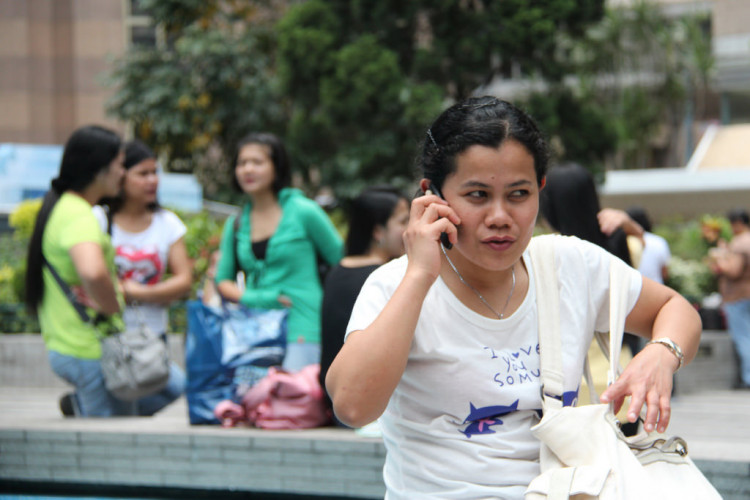
The Philippines is known for having the longest Christmas season. Filipinos celebrate Christmas day with family gatherings, reunion, and feast, but things are different for the 200,000 Filipino domestic helpers in Hong Kong.
In the Philippines, different ethnic groups hold different traditions during the Christmas season. According to the South China Morning Post, there is Simbang Gabi, nine days of dawn masses that happen from December 16 to 24 that usually start at 3 a.m. There is also Niños Inocente or Holy Innocents' Day that takes place on December 28.
On December 31, families gather for a lavish midnight feast for Media Noche, which symbolizes hope for the coming year. Filipinos also celebrate the Feast of the Santo Niño (Christ Child) every third Sunday of January.
But this is not the way Filipino domestic helpers celebrate Christmas in Hong Kong. In HelperChoice's 2017 survey, it noted that almost half of the country's helpers visit the church every Christmas day. Twenty-one percent celebrate the holiday with their employer's family while 20 percent gather with their friends.
Sixteen percent will remain at work on Christmas, although Filipino workers in Hong Kong have statutory holidays. The Hong Kong Labour Department said that employers would choose their aids' statutory holiday. It could happen either on December 22, the day of the Winter Solstice Festival in China or on Christmas Day.
National Geographic reported that about 6,000 Filipino leave the Philippines every day to find their luck in a different country. One-third of the world's mariners are Filipinos. One-third of registered nurses in the United States are also Filipinos. There are also Filipino singers, caregivers, laborers, domestic works, and engineers, among others all over the globe.
Some of them choose to go home on holiday season to celebrate Christmas day with their family. When they come home, there are the Bagong Bayani or modern-day heroes because of their sacrifices.
One in 10 Filipinos lives abroad, which is now a loaded word for them. Although their family will surely miss them, it is their only hope for a good future.
Christmas in the Philippines boasts a rich combination of "homegrown and colonial traditions." It is the best time to hope and expect for the best for Filipinos.
As early as August, Christmas decorations go on sale. When the first day of September comes, Christmas carols will be on the play. And as December draws closer, the country becomes brighter because of decorations, Christmas lights, and colorful lanterns that symbolize the star of Bethlehem. These are just a few things Filipino domestic helpers have to sacrifice to give their families a better future.