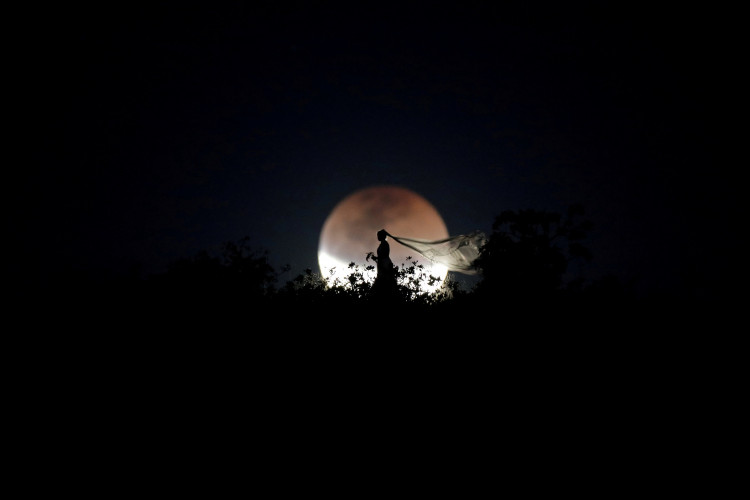
There will be great celestial events happening in 2019. There will be solar and lunar eclipses, meteor shower, Mercury's black drop, and a lot more.
Meteor Shower
On January 3, you can witness the best meteor shower when the Quadrantids peak happens. It's best to see in a "truly dark place" like in Hong Kong's Sai Kung High Island Reservoir and Lantau Island. You may see around 50 to 100 shooting stars per hour in this event, per the South China Morning Post.
Total Lunar Eclipse
On January 20 to 21, a total lunar eclipse will happen that will last for almost three and a half hours. The mid-eclipse will set North America in a ringside seat while it will be witnessed late on the East Coast.
Veteran skywatcher Joe Rao told Sky & Telescope the eclipsed moon would be seen high in the mid-winter sky. If the night sky is cleared that time, you will luckily see this wonderful celestial event.
Total Solar Eclipse
On July 2, there will be a total solar eclipse that will give up to "4m 33s of totality." However, for you to experience the daylight darkness, you need to be in a remote stretch of the South Pacific Ocean. But, it's real landfall will be in central Chile and Argentina.
"[This positioning] takes the sting out of what might otherwise be a very cloudy environment," eclipse-weather expert Jay Anderson said. To get the best viewing experience, you should be in Chile's Elqui Valley and western Argentina's eastward side of the Andes.
Partial Lunar Eclipse
There will be a partial lunar eclipse on July 16. However, it will not be visible in North America as only skywatchers in Europe, Africa, southern Asia, and Australia can witness this celestial event. Its end will also be visible in South America before the moon rises.
Mercury's Black Drop Moment
On November 11, you may witness a once in a lifetime event when Mercury crosses the sun's disk. This celestial occurrence only happens once every 13 years. The next it will occur is in 2032.
Mercury's black disk crosses the sun and shows a teardrop-shaped black drip on the edge of the sun's disk for a brief moment. It is reportedly caused by the light's diffraction and the "sun's soft, gassy edge."
Annular Solar Eclipse
Before the year ends, skywatchers will witness the annular solar eclipse on December 26 for over three hours. It will begin in the north of Riyadh, Saudi Arabia, at dawn.
The greatest eclipse will occur in eastern Sumatra while Singapore will be in the perfect position to see the path of annularity. Before it leaves the Earth's surface, the antumbral shadow will be seen in Guam.