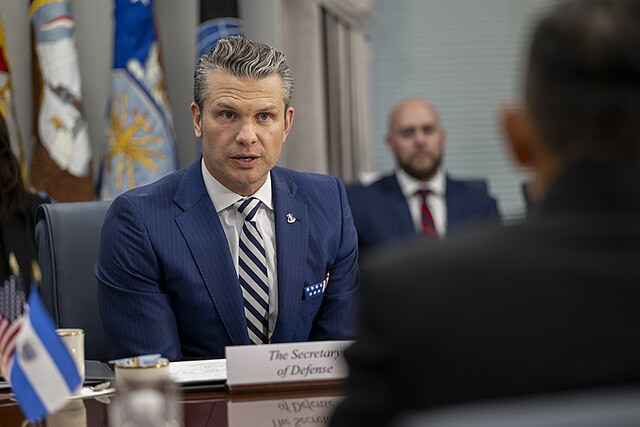
The Pentagon is facing intensifying scrutiny over the 2 September 2025 strike near Venezuelan waters, as congressional lawmakers and military-law experts question whether Defense Secretary Pete Hegseth attempted to distance himself from the decision to kill survivors of a destroyed vessel and shift responsibility onto Admiral Frank M. Bradley. The White House argues the follow-up attack was lawful, but internal memos and expert reviews indicate the decision may meet legal standards for war crimes, placing Bradley at the center of a politically charged confrontation over command accountability.
The administration has publicly portrayed Bradley, then commander of Joint Special Operations Command, as the operational authority behind the second strike. Hegseth issued a forceful endorsement, calling Bradley "an American hero ... a true professional" and affirming he had "my 100% support." White House press secretary Karoline Leavitt said "Secretary Hegseth authorized Admiral Bradley to conduct these kinetic strikes," adding Bradley "worked well within his authority and the law ... to ensure the boat was destroyed and the threat to the United States of America was eliminated."
The operation began when SEAL Team 6 destroyed a suspected narcotics-smuggling boat, leaving at least two survivors visible on drone footage. A second strike followed minutes later, killing the men as they clung to debris. A memo from the Former JAGs Working Group, cited in early legal assessments, states that both the alleged verbal order to "kill everybody" and the execution of that order, "if true ... constitute war crimes, murder, or both."
Legal analysts say Hegseth's remarks praising Bradley while emphasizing his autonomy in authorizing the strike amount to a deliberate separation of political and military responsibility. Under international law, orders to target shipwrecked survivors-unless those individuals are actively re-engaging in combat-violate long-established protections. Ryan Goodman, former Defense Department special counsel, warned that if Hegseth issued a directive, "then he bears ultimate responsibility," regardless of whether Bradley delivered the operational command.
Within military-law circles, the administration's narrative has been criticized as a classic attempt to identify a "fall guy." One former senior official told the Washington Post the strategy appeared designed to "protect Pete," shifting the burden from the White House to uniformed leadership. Such maneuvering, critics argue, risks eroding the principle of civilian oversight by placing military officers in the position of absorbing political liability for contested decisions.
The Pentagon is also confronting internal unease. Senior officials have expressed concern that the lack of clarity regarding the second strike's authorization could harm morale and trust in civilian leadership. One described the situation as "throwing service members under the bus," warning that confidence in the chain of command could weaken if political leaders evade responsibility.
Pressure is now building in Congress for a formal inquiry. Members of the House and Senate Armed Services Committees have requested drone footage, communications logs, and any written or verbal orders tied to the September operation. Depending on those findings, lawmakers may investigate whether the administration's counter-narcotics strategy in the Caribbean and Pacific, which has led to more than 20 lethal maritime operations this year and at least 82 deaths, has operated within the bounds of international and domestic law.