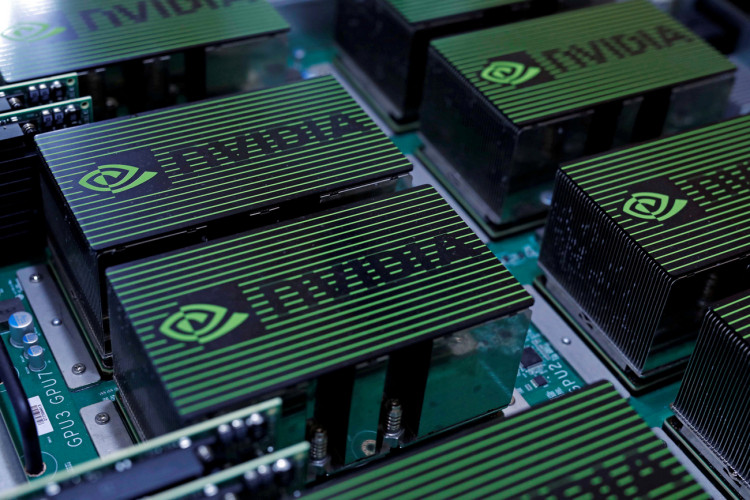
China is preparing to impose new limits on the purchase of advanced artificial-intelligence chips from overseas suppliers, a move that could reshape demand for products from NVIDIA and redefine how Chinese technology firms access cutting-edge computing power. The discussions follow Washington's recent decision to allow sales of Nvidia's H200 AI processors to China, reopening a supply channel that Beijing now appears intent on tightly managing.
According to people familiar with the deliberations cited by Nikkei Asia, Chinese regulators are considering a framework that would cap the volume of high-end foreign AI chips that domestic companies can import. The approach would stop short of an outright ban, instead creating a controlled pathway designed to preserve access to advanced hardware while reinforcing China's long-term push for semiconductor self-reliance.
Under proposals circulating within the government, approvals for H200 purchases could begin as early as the end of this month. Companies would be required to justify why imported chips are necessary, and authorities would retain discretion over which firms qualify and how many units they can buy.
Officials have also been holding frequent consultations with major technology groups to understand how foreign chips are currently deployed and why domestic alternatives cannot yet meet certain performance requirements. The process underscores Beijing's effort to avoid a surge in imports that could undercut local chipmakers.
One option under discussion involves quota-style limits governing the ratio of imported processors to domestically produced ones used by companies. While no final policy has been announced, such a system would effectively guarantee baseline demand for Chinese suppliers even if Nvidia's H200 is cleared for broader use.
Beijing has simultaneously sounded out companies on their interest in Nvidia's next-generation Blackwell processors, which have not yet received U.S. export approval for China. The outreach suggests policymakers are attempting to anticipate future demand while preventing overreliance on foreign technology.
China's caution reflects the rapid expansion of domestic AI-chip developers during periods when access to Nvidia products was constrained. Firms such as Huawei Technologies, Horizon Robotics and Cambricon have gained traction, alongside newer entrants including Moore Threads, MetaX, Biren Technology and Suiyuan Technology.
For Nvidia, the policy debate highlights the geopolitical uncertainty surrounding its China business. Chief executive Jensen Huang recently acknowledged that while the H200 remains competitive in the Chinese market, its technological edge may not be permanent without timely access to newer architectures.
Despite political friction, demand among China's largest internet groups remains strong. Companies such as Alibaba, Tencent and ByteDance continue to favour Nvidia's AI server systems for large-scale training and inference workloads.
At the CES technology show in Las Vegas, Nvidia chief financial officer Colette Kress said some Chinese customers had already submitted export-licence applications following the U.S. policy shift, adding that American authorities were actively reviewing those requests.