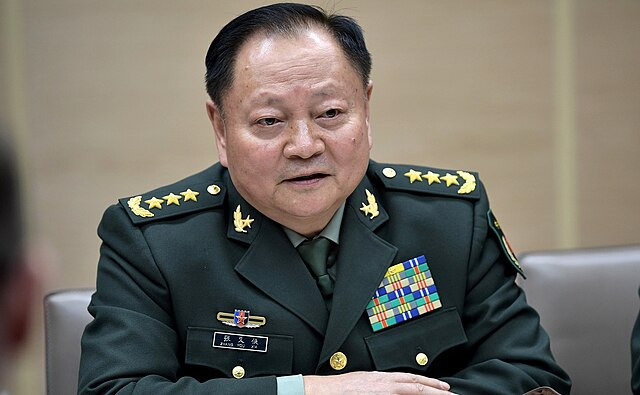
China's leadership has been shaken by allegations against one of its most senior military figures, as internal briefings disclosed that Gen. Zhang Youxia, a former vice chairman of the Central Military Commission and a long-time ally of President Xi Jinping, is under investigation for corruption and for allegedly leaking sensitive information related to China's nuclear weapons program. The case, emerging days before renewed U.S.-China talks on trade and security, threatens to undermine Beijing's claims of cohesion within the People's Liberation Army and could reshape the diplomatic landscape confronting Washington.
According to internal military briefings dated Jan. 24, 2026, Zhang is accused of serious violations of party discipline and state law, including accepting bribes to promote favored officers and forming political cliques within the armed forces. The briefings also referenced allegations that Zhang transmitted core technical data connected to China's nuclear arsenal to the United States, an accusation that, if substantiated, would represent one of the most severe breaches of state secrecy in the country's modern history.
Zhang, 75, has occupied a rare position within China's political and military hierarchy. A "princeling" with family ties to revolutionary leaders, he was viewed as part of the inner circle trusted to safeguard the Communist Party's control over the military. His proximity to Xi, analysts say, amplified his authority and insulated him from scrutiny for years.
The investigation places Zhang alongside a widening circle of senior officials swept up in China's anti-corruption campaign. Internal disclosures linked him to the promotion of former defense minister Li Shangfu, who was later expelled from the party for corruption. The briefings also pointed to connections with Gu Jun, the former head of China National Nuclear Corporation, who was placed under investigation earlier in January for severe disciplinary violations, suggesting potential vulnerabilities in the nuclear sector's oversight.
Beijing has publicly framed the inquiry as part of a zero-tolerance approach to corruption, but the breadth of recent purges has drawn attention from security analysts. Over the past two years, multiple senior officers and defense-industry executives have been removed, and command structures overseeing Taiwan and strategic missile forces have undergone restructuring. Such moves, analysts say, signal deep concern about loyalty and internal discipline at a time of heightened external pressure.
The shake-up could carry operational consequences. China's military expansion has relied on continuity among experienced commanders, and the removal of senior leaders risks slowing decision-making and complicating coordination across services. Analysts warn that disruptions at the top could affect readiness in sensitive theaters, particularly around Taiwan, where rapid and unified command is critical.
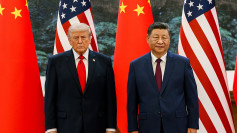
For Washington, the timing is notable. U.S. and Chinese officials are preparing for talks expected to cover tariffs, technology controls and regional security. Allegations that a top Chinese general may have compromised nuclear secrets could weaken Beijing's negotiating position and expose fissures in its governance model. President Donald Trump, who has favored transactional diplomacy, may view the scandal as leverage in pressing Beijing for concessions or assurances.