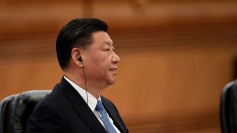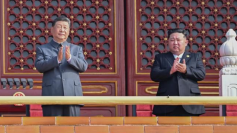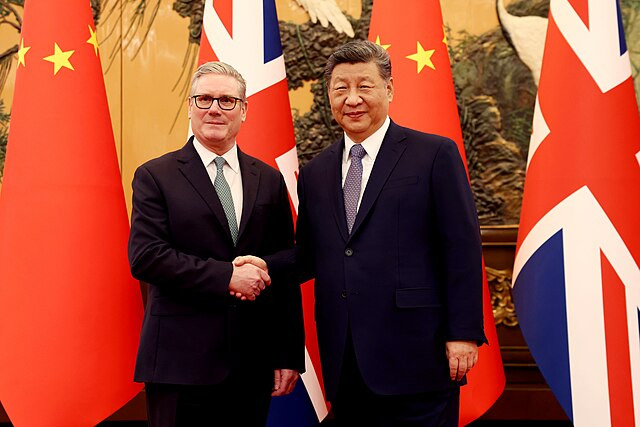
British Prime Minister Keir Starmer and Chinese President Xi Jinping agreed to pursue closer UK-China cooperation during an extended meeting in Beijing, as shifting U.S. trade and foreign policies under President Donald Trump push allies to reassess global partnerships. The talks, held at the Great Hall of the People, marked the first visit by a British prime minister in eight years and came as both governments seek stability amid what Xi described as a "turbulent and ever-changing international situation."
"I think that working together on issues like climate change, global stability during challenging times for the world is precisely what we should be doing as we build this relationship in the way that I've described," Starmer told Xi at the start of their meeting. The two leaders spoke for roughly 80 minutes-twice the scheduled time-underscoring the importance both sides attached to resetting relations after years of strain.
Xi acknowledged the recent difficulties in bilateral ties. "China-U.K. relations experienced setbacks in previous years, which was not in the interests of either country," he said. Without directly referencing Washington, he added that "in the current turbulent and ever-changing international situation ... China and the U.K. need to strengthen dialogue and cooperation to maintain world peace and stability."
Chinese state broadcaster CCTV said Xi warned that if "major powers" failed to respect international law, the world risked descending into a "jungle," a remark widely interpreted as a critique of unilateralism. Starmer later said the discussions produced "really good progress," citing advances on trade issues including potential tariff reductions on Scotch whisky and steps toward visa-free travel for British visitors.
"The relationship is in a good place, a strong place," Starmer said after the meeting. Xi appeared to address domestic criticism Starmer has faced over engaging Beijing despite national security and human rights concerns, saying, "Good things often come with difficulties," and adding that leaders should "forge ahead bravely" when acting in their countries' fundamental interests.
The visit came weeks after a Hong Kong court convicted Jimmy Lai, a British citizen, under Beijing's national security law. Starmer said he raised human rights concerns with Xi and described the exchange as a "respectful discussion," while reiterating his pledge to balance security with dialogue and economic cooperation.
Economic considerations loom large for the Labour government, elected in July 2024, as it struggles to deliver growth and ease a cost-of-living crisis. More than 50 U.K. business executives joined Starmer in Beijing, alongside leaders of major cultural institutions, as London seeks expanded market access and Chinese investment.
Trade disruption under Trump has heightened the urgency. The U.K. leader is the fourth head of a U.S.-aligned country to visit Beijing this month, following leaders from South Korea, Canada and Finland, with Germany's chancellor expected next. European Council President Antonio Costa said earlier this week, "At a moment when the international rules-based order is under threat from multiple sides, we need to stand side by side as reliable and predictable partners."
Alongside strategic dialogue, Starmer and Xi signed a law-enforcement agreement aimed at curbing migrant smuggling across the English Channel. Britain and China agreed to share intelligence to disrupt supply chains for small boats and engines used by criminal gangs. The Home Office said 41,472 people crossed the Channel in 2025, the second-highest annual total on record.
Key figures cited by British officials include:
- 41,472 Channel crossings in 2025
- 60% of small-boat engines traced to Chinese manufacturers
"This deal will help us cut off the supply of boats at source - stopping crossings before lives are put at risk and restoring control to our borders," Starmer said. "This is Britain back at the top table, delivering real results for the British people through our international relationships."
Before meeting Xi, Starmer was received by Zhao Leji, chairman of China's National People's Congress. Zhao said it was "significant" to advance UK-China relations amid a "changing and turbulent international landscape," adding that ties were on "the correct track to improvement and development" and that "positive progress has been made."