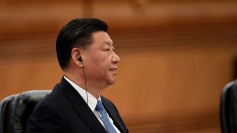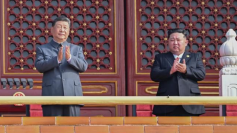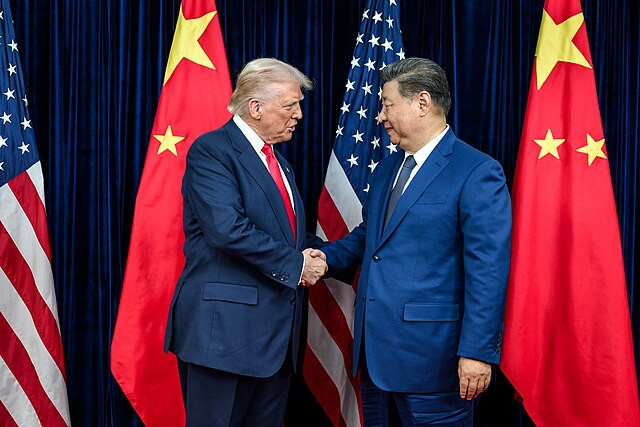
President Donald Trump is weighing whether to postpone a planned visit to Beijing later this month as the escalating Iran war and threats to shipping through the Strait of Hormuz reshape global energy markets and diplomatic priorities, administration officials said Monday.
Trump suggested in recent remarks that the trip to meet Chinese President Xi Jinping could be delayed while the White House coordinates its military campaign against Iran and presses Beijing to help stabilize oil flows through the strategically vital waterway.
Treasury Secretary Scott Bessent, however, sought to downplay speculation that the potential delay was meant to pressure China over the Hormuz crisis.
"If the meeting for some reason was rescheduled, it would be rescheduled because of logistics," Bessent said on CNBC. "The president wants to remain in D.C. to coordinate the war, and traveling abroad at a time like this may not be optimal."
Trump first raised the possibility of postponing the trip in an interview with the Financial Times, where he suggested he wanted to know whether China would support efforts to keep oil tankers moving through the narrow maritime corridor.
"We may delay," Trump said.
The Strait of Hormuz connects the Persian Gulf to the Gulf of Oman and carries a significant share of global oil exports. The ongoing conflict with Iran has slowed tanker traffic and pushed crude prices above $100 per barrel, raising concerns about global supply disruptions.
White House press secretary Karoline Leavitt confirmed that the timing of Trump's Beijing trip remains uncertain.
"At this point, the president looks forward to visiting China. The dates may be moved," Leavitt told reporters at the White House. She added: "As commander in chief, it's his number one priority right now to ensure the continued success of this Operation Epic Fury."
The administration has been urging other countries to contribute naval forces to protect oil tankers moving through the strait.
Speaking to reporters aboard Air Force One, Trump said the United States had approached multiple governments about joining the effort.
"We've spoken to about seven" countries, Trump said, declining to name them.
He also indicated that Washington had raised the possibility with Beijing.
"China's an interesting case study," Trump said. "So I said, 'Would you like to come in' and we'll find out. Maybe they will, maybe they won't."
China has responded cautiously to the proposal.
At a briefing in Beijing, Chinese Foreign Ministry spokesperson Lin Jian confirmed that communication between the two governments continues regarding the planned presidential visit.
"Head-of-state diplomacy plays an irreplaceable strategic guiding role in China-U.S. relations," Lin said.
Chinese officials have also emphasized the country's ability to manage potential disruptions in energy supply.
According to Fu Linghui, spokesperson for China's National Bureau of Statistics, the country's energy reserves remain strong despite volatility in global oil markets.
China's energy supply is "relatively strong," and provides a "relatively good" foundation to handle external shocks, Fu said at a briefing reported by CNBC.
Official data released alongside the statement showed that China's domestic crude production increased 1.9% year over year to 35.73 million metric tons during January and February.
China also maintains significant strategic reserves.
Analysts estimate the country holds roughly 1.2 billion barrels of onshore crude stockpiles, enough to meet domestic demand for three to four months.
Energy analysts note that China relies on the Strait of Hormuz for only a portion of its total oil supply.
Estimates suggest the waterway accounts for:
- 40%-50% of China's seaborne oil imports
- About 6.6% of China's total energy consumption
Those figures contrast with Trump's claim that China receives "90% of its oil" through the strait.
Despite the tensions, U.S.-China economic diplomacy continues.
Bessent was speaking from Paris, where he held meetings with Chinese Vice Premier He Lifeng as part of ongoing trade negotiations designed to stabilize relations between the two largest economies.
The discussions aim to preserve a fragile truce that has prevented the two countries from imposing new tariffs during a period of heightened geopolitical stress.
"We had a very good two days here," Bessent said, adding that a joint statement reaffirming economic stability between Washington and Beijing would be issued "in the next few days."