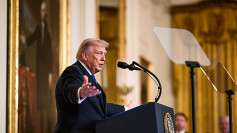
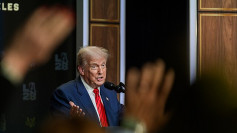
President Donald Trump warned he is weighing legal action against comedian Trevor Noah after a joke delivered during the opening monologue of the Grammy Awards thrust an awards-show moment into a broader dispute over satire, politics and free speech. The warning followed a line in which Noah linked renewed global interest in Greenland to Trump's past fixation on the territory, quipping that it came after "Epstein Island is gone," a remark that quickly spread across social media.
Within hours, Trump responded on his Truth Social account, calling the joke "defamatory," denying any wrongdoing and saying he was "reviewing legal options." No lawsuit has been filed, and no court papers have been lodged, but the public threat transformed a fleeting punchline into a political flashpoint that dominated post-Grammys coverage.
Trump's posts went beyond the joke itself, attacking the ceremony and the entertainment industry's political tone. He described the Grammys as "virtually unwatchable," accusing awards shows of drifting from music toward partisan commentary. The Recording Academy, which produces the Grammys, has not issued a formal response.
Legal analysts cited by U.S. media outlets characterized Trump's remarks as a threat rather than an action. Commentators noted that defamation claims against comedians face a steep bar, particularly for public figures, given long-standing protections for satire and opinion. As of publication, there is no indication that Trump's lawyers have initiated proceedings against Noah or the Recording Academy.
The incident landed amid ongoing debates about politics at major cultural events. Online reaction was swift and polarized. On X, one widely shared post argued the ceremony had "stopped being about music and become ideological propaganda," echoing criticism that awards shows increasingly use their platforms for political messaging. Defenders of Noah countered that political satire has long been a staple of awards-show monologues.
Viewership trends help explain the intensity of the reaction. According to Nielsen, Grammy ratings have fallen more than 40% from their 2012 peak, prompting analysts to argue that controversy now plays a larger role in driving attention and online engagement. In that context, even brief exchanges can reverberate far beyond the broadcast.
More speculative reactions also surfaced. On Reddit, some commenters framed the backlash as evidence of deeper institutional distrust, though such claims were unsupported. Researchers who track online discourse say algorithms often amplify polarizing interpretations, extending debates well past their original scope.
For Noah, the episode underscores his evolution since leaving The Daily Show, where political commentary was central to his role. His continued presence at high-profile events reflects a willingness to engage politically, a stance that has drawn both praise and criticism. For Trump, the threat adds to a pattern of confronting cultural institutions he argues are aligned against him.