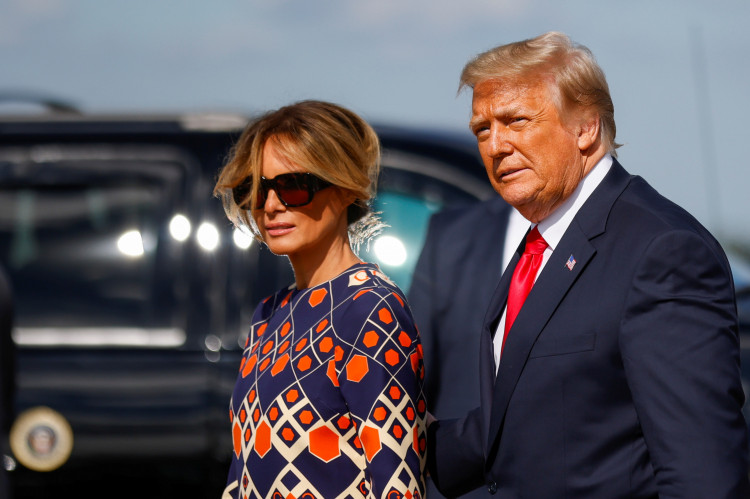
Newly unsealed Justice Department records have placed Jeffrey Epstein at the center of a long-debated chapter in the personal history of Donald Trump and Melania Trump, reviving questions about the depth of Epstein's access to political and social power in New York during the late 1990s.
The allegation appears in a federal investigative document known as an FBI Form 302, summarizing a July 13, 2019 interview conducted after Epstein's arrest on sex-trafficking charges. According to the memo, a witness described Epstein as having played a direct role in introducing Trump to Melania Knauss, contradicting the long-public narrative that the couple met by chance at a 1998 Fashion Week event.
The document, part of a broader trove of materials released under court supervision, does not accuse either Trump or Melania Trump of wrongdoing. Instead, it focuses on how investigators understood Epstein's self-described role as a social broker who cultivated relationships by arranging introductions among wealthy and influential figures.
An FBI Form 302 is not a sworn statement or a judicial finding. It is a contemporaneous summary of what a witness told federal agents, recorded to preserve information that may inform investigative decisions. In this case, the witness-identified only as a former associate within Manhattan's fashion and modeling circles-claimed Epstein frequently boasted about "placing" women in elite social environments as a means of maintaining leverage.
According to the memo, Epstein viewed the Trump-Melania relationship as evidence of his effectiveness as a connector between foreign models and powerful American men. The witness told agents that Epstein's involvement was deliberate, not incidental, and fit a broader pattern of curated introductions tied to real-estate, media and finance networks in New York.
Federal investigators documented Epstein's extensive ties to the modeling industry during this period, including financial relationships with agencies and scouts who helped facilitate visas, housing and access to exclusive events. The Form 302 notes that Epstein's Manhattan residence was frequently used as a staging ground for social gatherings attended by prominent figures.
The records were compiled as part of a wider effort by prosecutors to map Epstein's "loyalty network," a system that relied on favors, introductions and financial support rather than formal business arrangements. Investigators estimated that Epstein spent tens of millions of dollars annually to maintain properties, staff and social access across New York, Florida and abroad.
Trump has previously acknowledged knowing Epstein socially but has said their relationship ended years before Epstein's 2008 conviction. The White House, responding to the newly cited memo, dismissed the matchmaking claim as "unfounded and false," pointing to Justice Department warnings that released files may include unverified or fabricated statements submitted by third parties.