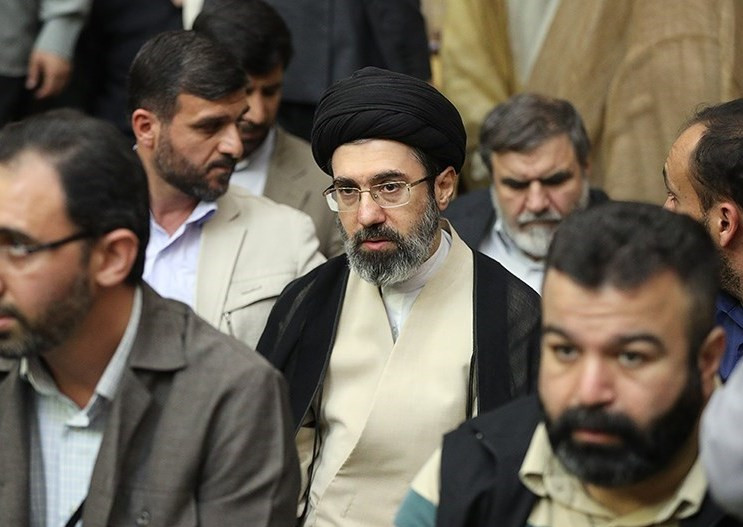
A classified intelligence assessment cited by The Times of London has intensified uncertainty over Iran's leadership, reporting that Mojtaba Khamenei is unconscious and "unable to be involved in any decision-making" weeks after U.S.-Israeli strikes killed his father, Ali Khamenei, and destabilized the country's command structure.
The memo, based on U.S. and Israeli intelligence, states that Mojtaba Khamenei is being treated in Qom in "severe" condition. If accurate, the finding would suggest that Iran's nominal head of state is incapacitated during one of the most volatile military confrontations in decades.
Iranian state media has presented a sharply different narrative. Since Mojtaba Khamenei's appointment on March 8, authorities in Tehran have maintained that he is actively directing the country's response to the conflict, issuing statements and guiding policy. However, those communications have been delivered exclusively as written texts read aloud by television anchors, with no accompanying audio or video evidence.
One such statement, broadcast on March 12, declared: "I assure everyone that we will not refrain from avenging the blood of your martyrs." The message continued: "the retaliation we have in mind is not limited only to the martyrdom of the great leader of the revolution [Ayatollah Ali Khamenei]; rather, every member of the nation who is martyred by the enemy constitutes a separate case in the file of revenge."
A second statement attributed to Mojtaba Khamenei on April 1 reinforced Iran's geopolitical posture, stating: "I firmly declare that the consistent policy of the Islamic Republic of Iran, in continuing the path of the late Imam and martyred leader, is based on continuing to support the resistance against the Zionist-American enemy." As with earlier communications, the statement appeared only in text form.
The absence of any verifiable public appearance has become a focal point for analysts. In prior transitions of power within the Islamic Republic, the Supreme Leader has typically asserted authority through visible engagement, particularly during periods of national crisis.
The intelligence memo's claims, if confirmed, would point to a de facto shift in governance. Analysts suggest that authority may be concentrated among senior figures within the Islamic Revolutionary Guard Corps and clerical establishment, operating collectively while issuing directives in the leader's name.
The leadership ambiguity arrives at a critical moment for global markets and regional security. Iran's threats to disrupt the Strait of Hormuz-through which roughly 20% of global oil supply flows-have already contributed to heightened volatility in energy markets, with traders pricing in geopolitical risk tied to command uncertainty.
At the same time, Tehran has not issued any formal medical update or visual proof of Mojtaba Khamenei's condition. The absence of transparency has left both domestic audiences and international observers reliant on competing narratives: official state messaging asserting continuity, and external intelligence suggesting incapacity.