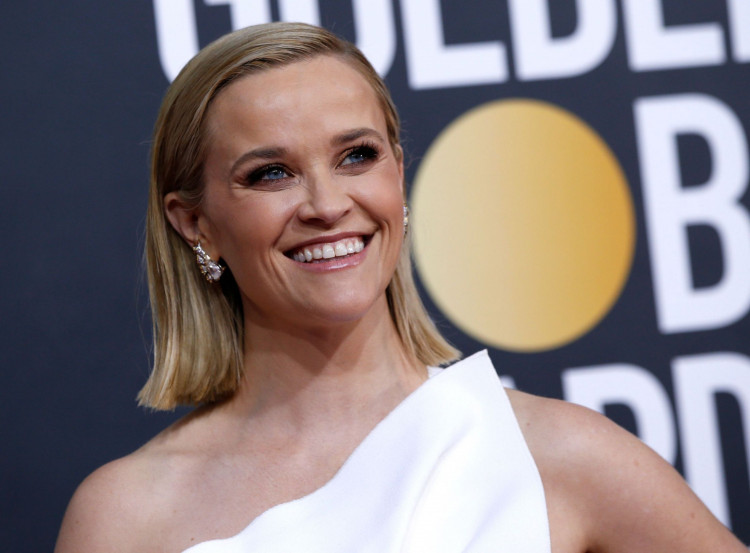
Reese Witherspoon spent years starring in some of Hollywood's most commercially successful films before a blunt conversation with studio executives pushed her toward a far bigger ambition: building a media company centered on women's stories after discovering how few major projects actually were.
The Oscar-winning actress said she visited nearly every major Hollywood studio and repeatedly asked executives a simple question: how many films were currently in development with a female lead. According to Witherspoon, the answer was often none.
"One executive told her the studio had already made a film 'with the woman at the centre of it' that year and could not justify making a second," Witherspoon recalled during an appearance on Harvard Business School's new podcast The Founder Mindset, hosted by entrepreneur Reza Satchu.
"First I got mad, and then I was like, Wait - this is a huge white space," Witherspoon said.
That frustration eventually became Hello Sunshine, the women-focused media company she co-founded in 2016. Five years later, the business sold a majority stake to Blackstone-backed Candle Media in a deal valuing Hello Sunshine at roughly $900 million.
The company's rise transformed Witherspoon from a leading actress into one of Hollywood's most influential media entrepreneurs at a time when streaming platforms, publishing companies and studios were aggressively searching for scalable intellectual property tied to recognizable brands.
The business story, however, began long before Hollywood boardrooms.
Witherspoon told Satchu that financial instability during her childhood fundamentally shaped her view of work, money and independence. She described watching her family struggle with debt during her teenage years because of what she called her father's "spending issues," eventually helping manage household finances herself by age 16.
"I always had this idea that no one's coming to save me," Witherspoon said. "I didn't have a financial safety net. My parents were loving and kind, but they didn't have the means to send me to college."
She briefly attended Stanford University before leaving because she could no longer afford tuition.
"People try to paint my dropout story like I'm some sort of wunderkind that had some great business," she said. "But it was literally just I couldn't pay for, I couldn't afford tuition."
Before Hello Sunshine emerged, Witherspoon attempted to reshape Hollywood's gender imbalance through Pacific Standard, the production company she launched alongside Australian producer Bruna Papandrea.
The company quickly secured critical and commercial successes through adaptations of Wild and Gone Girl, both of which became major film projects. Combined with HBO's Big Little Lies, the productions generated Oscar nominations and more than $600 million at the box office, according to Witherspoon.
Yet despite the prestige and revenue, the economics remained difficult.
"I was only working for producer fees. I had four employees, and I was only breaking even," Witherspoon said. "The overhead was eating me alive. That's not a real business."
The realization pushed her toward a more scalable model built around ownership, recurring intellectual property and direct audience engagement.
Hello Sunshine expanded rapidly beyond television and film into publishing, digital content and consumer branding. Projects including Little Fires Everywhere and The Morning Show strengthened the company's streaming footprint, while Reese's Book Club became one of publishing's most commercially influential recommendation engines.
Industry executives increasingly viewed Witherspoon not simply as talent, but as a pipeline for female-focused storytelling with built-in audience demand.
By the time Candle Media acquired a majority stake in 2021, the valuation reflected future growth expectations as much as current profitability. Reports noted that Hello Sunshine had only become profitable in 2020, one year before the deal closed.
Today, Witherspoon's personal net worth is estimated between $400 million and $440 million, with Hello Sunshine representing the largest contributor to her wealth. But during the podcast discussion, she framed the company less as a celebrity vanity project than as evidence that women-led businesses could thrive in sectors that had historically marginalized them.