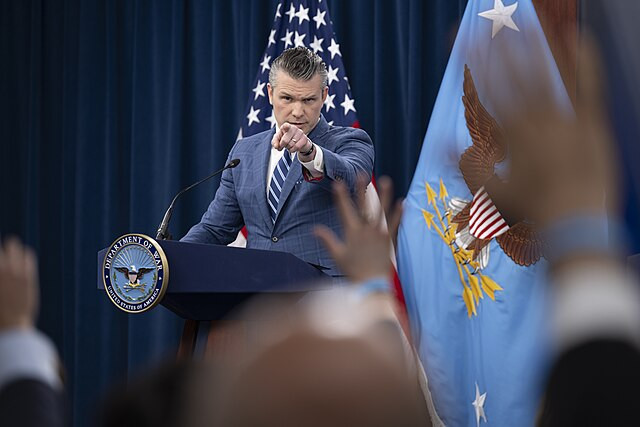
Defense Secretary Pete Hegseth has launched a sweeping overhaul of military fitness standards, ordering more frequent physical testing across the armed forces while publicly warning senior commanders that overweight generals and admirals undermine the image and readiness of the U.S. military.
Speaking before general and flag officers at Marine Corps Base Quantico in Virginia, Hegseth outlined a series of reforms that place renewed emphasis on physical fitness, body composition standards and personal accountability throughout the ranks. The initiative comes as the Trump administration seeks to reshape military culture around what officials describe as combat readiness and performance.
The changes affect every level of the force, from enlisted service members to four-star officers. Hegseth said all active-duty personnel will be required to complete physical fitness tests twice each year and meet body composition standards on the same schedule.
According to an official Pentagon transcript of the speech, Hegseth expressed frustration with what he described as declining standards among some military leaders.
He told commanders that it was unacceptable to see overweight personnel in formation and added that seeing overweight generals and admirals in the Pentagon was equally unacceptable. He emphasized that every service member, including the military's most senior officers, would be required to meet the same standards.
The remarks quickly gained attention online, particularly after Hegseth described overweight senior officers as a "bad look." While social media commentary amplified the statement, the official Defense Department transcript confirms the secretary's broader message that leadership must set the example before expecting compliance from the force.
The policy announcement builds on a Pentagon review initiated by Hegseth shortly after taking office. On March 12, 2025, he directed a department-wide examination of physical fitness, body composition and grooming standards, arguing that military requirements should support what he described as the world's most effective fighting force.
The Quantico speech represented the most detailed public outline of those efforts to date. Defense Department officials said Hegseth referenced 11 separate memorandums covering fitness standards, training requirements, investigations and personnel policies.
Under the new framework:
- Active-duty personnel will complete two physical fitness tests annually.
- Height and body composition evaluations will occur twice each year.
- National Guard and Reserve members will maintain fitness programs and complete annual testing requirements.
- Commanders will face increased accountability for maintaining standards within their units.
The body composition component may prove particularly consequential. Pentagon guidance issued by the Office of Personnel and Readiness established a waist-to-height ratio measurement, known as WHtR, as the department's preferred body composition metric beginning Jan. 1, 2026.
The guidance replaced traditional height-and-weight tables with a requirement that service members maintain a waist-to-height ratio below 0.55. Personnel who exceed that threshold face additional body-fat assessments and monitoring.
The memorandum also outlines potential career consequences for those who repeatedly fail to meet standards. According to the guidance, favorable personnel actions, including promotions, may be withheld from service members who do not comply. Continued failure could result in administrative measures, including separation proceedings.