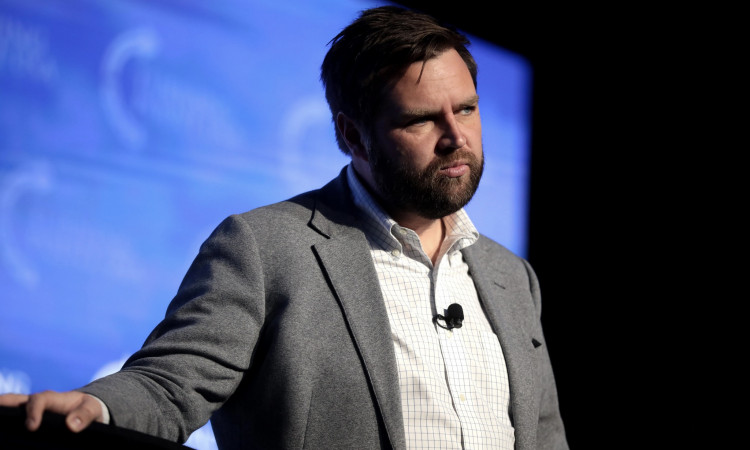
Vice President JD Vance said Monday that Iran has agreed to invite inspectors from the International Atomic Energy Agency (IAEA) into the country, marking what the Trump administration described as the most significant breakthrough yet in ongoing negotiations aimed at ending hostilities between Washington and Tehran.
The announcement came after a tense weekend of talks in Switzerland that at one point appeared at risk of collapsing following a series of public threats exchanged between President Donald Trump and Iranian officials. Despite the friction, negotiators from both sides emerged with a framework for continued discussions and a commitment to pursue a broader agreement within 60 days.
Speaking after the talks, Vance characterized Iran's willingness to allow inspections as a critical step toward addressing long-standing concerns about its nuclear activities.
"It's a major milestone and a first step in permanently ending a nuclear weapons program in Iran," Vance said.
According to Axios, securing an invitation for IAEA inspectors had been one of Washington's primary objectives during the opening round of negotiations at the Burgenstock resort in Switzerland. The administration views independent verification as essential to any future agreement, particularly after years of disputes over Iran's nuclear program.
Vance said coordination between Tehran and the IAEA would begin immediately.
"This week, maybe as soon as today," he said when asked when inspectors could potentially begin discussions regarding access.
Questions remain, however, about what inspectors would be permitted to examine. Several key Iranian nuclear facilities were damaged during U.S. military strikes in June 2025 amid the conflict involving Iran and Israel. Neither Vance nor Iranian officials have publicly detailed the scope of any future inspections or whether access will extend to all facilities sought by international monitors.
The diplomatic progress followed a weekend that highlighted both the fragility and importance of the negotiations. The United States and Iran agreed to establish a roadmap toward a final settlement, while mediators from Pakistan and Qatar described the discussions as "positive" and "constructive."
Negotiators also created a High Level Committee tasked with overseeing future talks and established a deconfliction mechanism addressing tensions in Lebanon, where clashes between Israel and Hezbollah have continued despite broader diplomatic efforts.
The atmosphere surrounding the talks deteriorated after President Trump publicly threatened Iran if it failed to restrain Hezbollah or interfered with maritime traffic through the Strait of Hormuz.
Speaking to Fox News, Trump warned Tehran: "You close it and you won't have a country," according to reporter Trey Yingst.
The president also responded sharply after Iranian President Masoud Pezeshkian reaffirmed Tehran's position on uranium enrichment. According to Yingst, Trump said Pezeshkian should "better watch his mouth" and "better shape up or we'll take over the rest of the country."
Iranian officials reacted swiftly. Through the semi-official Tasnim news agency, members of the Iranian delegation said they had protested Trump's comments and were reviewing what they called an appropriate response to the president's threats.
The exchange raised concerns that Tehran could abandon the negotiations altogether. Vance acknowledged those tensions during remarks Monday but insisted the talks remained productive despite the rhetoric.
"We told the Iranians yesterday. 'When you guys engage in what we millennials call trash talk, you can't expect the president of the U.S. not to respond and not to correct the record,'" Vance said.
"So yes, there was a little bit of threatening and a little bit of whining but at the end of the day the talks continued and we made great progress," he added.
Another unresolved issue involves Iranian financial assets frozen under U.S. sanctions. Iranian Foreign Minister Abbas Araghchi has publicly suggested that some restricted funds could be released as part of confidence-building measures. Vance disputed that characterization, stating that no frozen assets had been released.
The negotiations now enter a more technical phase as diplomats attempt to transform the initial framework into a comprehensive agreement. The 60-day timeline established in Switzerland is expected to focus on three major areas:
- Nuclear monitoring and verification measures.
- Sanctions relief and access to frozen assets.
- Regional security issues, including Lebanon and the Strait of Hormuz.
The inspection agreement announced by Vance does not resolve those disputes, but it provides the first tangible sign that both governments may be willing to move beyond the military confrontation that dominated relations over the past year. Whether that opening survives the political pressures facing leaders in Washington and Tehran is likely to determine the success or failure of the broader peace effort.