President Donald Trump's late-night Truth Social activity and public mannerisms are drawing renewed scrutiny after a healthcare specialist argued that some of his behavior resembles symptoms seen in dementia patients, including a phenomenon known as "sundowning." The claims, made by licensed physical therapist Adam James in an interview with mental-health counselor Dr. Steven Hassan, aren't based on a personal medical examination of Trump and don't establish that the president has dementia.
James, who said his work includes treating elderly patients, focused particularly on Trump's tendency to publish large numbers of posts late in the evening. He argued that the timing and intensity of some of those episodes resemble behavioral changes he has observed among patients with progressive neurological disorders.
Sundowning generally refers to increased confusion, agitation or behavioral changes that can occur later in the day among some people with dementia. James suggested Trump's bursts of nighttime posting could fit that pattern, though social-media behavior alone can't establish a neurological diagnosis.
James said Trump sometimes publishes dozens of messages in rapid succession on Truth Social, including political attacks, reposted material and artificial-intelligence-generated images. He highlighted an instance in which Trump shared an offensive video involving Barack and Michelle Obama at around 11:30 p.m., arguing that the timing was consistent with the period when some dementia patients experience heightened agitation or paranoia.
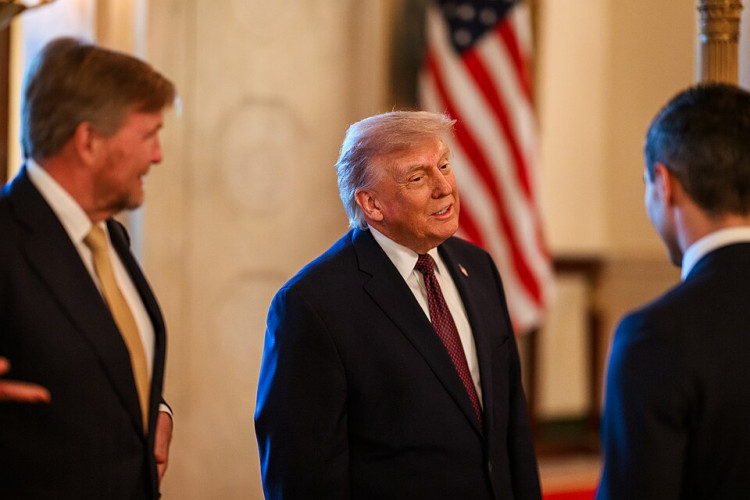
The specialist also pointed to Trump's physical posture. James said the president's distinctive forward-leaning stance could be consistent with symptoms associated with frontotemporal dementia, though Trump has displayed a similar posture publicly for years and no publicly disclosed medical finding cited in the article connects it to a neurological disorder.
James separately raised the possibility of confabulation, a medical term describing false or distorted memories produced without a deliberate intention to deceive. He cited Trump's statements about former Colorado election official Tina Peters as an example, arguing that the president had made inaccurate assertions about her imprisonment, conduct and health.
Those observations remain speculative. James isn't identified as Trump's treating physician and hasn't performed a neurological examination of the president, meaning his comments amount to an interpretation of publicly observable behavior rather than a clinical diagnosis.
That distinction is particularly important because dementia and other neurological conditions typically require direct medical assessment. Physicians can use medical histories, neurological examinations, cognitive testing, laboratory studies and imaging when determining whether symptoms are consistent with a particular disorder; snippets of speeches, photographs and social-media activity provide a substantially narrower evidentiary basis.
The interview also ventured into more tenuous territory when Hassan raised allegations concerning incontinence. James referred to accounts claiming that an assistant associated with the production of "The Apprentice" had been tasked with handling hygiene accidents involving Trump.
No official medical records or other evidence presented in the source substantiate that allegation, and it doesn't provide a reliable basis for determining Trump's health. The claim therefore remains unverified and shouldn't be treated as evidence of dementia.
The discussion comes amid broader scrutiny of Trump's health as he serves another term in the White House at an advanced age. Questions about the physical and cognitive fitness of presidents have repeatedly become politically charged, making the distinction between documented medical findings and interpretations offered by outside observers particularly significant.
The White House has maintained that Trump is capable of performing his presidential duties, while critics have repeatedly pointed to his speeches, public appearances and online behavior as potential evidence of decline. Nothing in James's interview, however, independently establishes that Trump has frontotemporal dementia or another neurological disease.