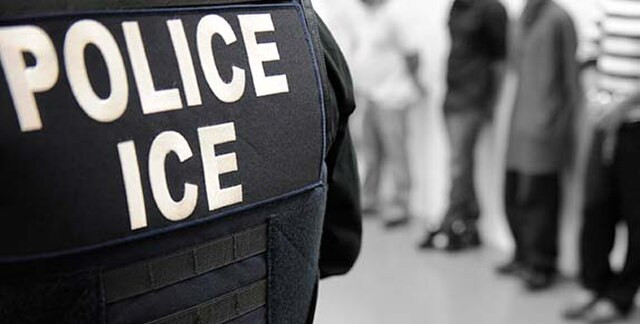
A Virginia man who suffered a brain bleed and other serious injuries after being apprehended by U.S. Immigration and Customs Enforcement is unable to undergo an MRI because ICE hasn't removed a GPS ankle monitor that interferes with the procedure, according to his attorney.
Jose Mejia Hernandez, known as Don José, was hospitalized following an Aug. 11 encounter with federal immigration officers in Arlington, Va. His attorney says Mejia Hernandez has no memory of much of the encounter, leaving unresolved questions about how he sustained facial trauma, brain swelling and internal bleeding.
According to the attorney's account, Mejia Hernandez was walking to work at about 6:30 a.m. when a truck approached quickly and two men emerged and began pursuing him. Mejia Hernandez, who the attorney says didn't initially know who they were, ran.
The attorney says Mejia Hernandez believes he was then struck with a Taser or another type of stun device. His memory ends at that point, and he can't recall how his injuries occurred, who transported him from the scene or the circumstances under which he arrived at the hospital.
When Mejia Hernandez regained consciousness, he had extensive facial injuries, according to his lawyer. Those reportedly included black eyes, cuts, heavy bruising and an injured lip requiring seven stitches, in addition to the neurological injuries later identified by medical personnel.
The circumstances surrounding his hospitalization have also become part of the dispute. His attorney says two ICE officers remained beside Mejia Hernandez while he was receiving treatment, preventing him from having private conversations with his physicians.
A nurse eventually spoke quietly to Mejia Hernandez in Spanish and told him that he had suffered a brain bleed and brain swelling, according to the attorney. The lawyer says his client didn't otherwise receive a complete explanation of his condition or how the injuries might have occurred.
Mejia Hernandez's wife and stepchild also didn't know where he was for roughly three days, his attorney alleges. Neither the Department of Homeland Security nor the hospital notified them that he had been detained and hospitalized, according to the lawyer's account.
After the initial hospitalization, ICE released Mejia Hernandez from custody under immigration supervision, according to his attorney. The lawyer says Mejia Hernandez didn't initially understand that he was being released and was transported from the hospital to an ICE office after being given food and instructed to contact his family.
At the immigration office, officials fitted him with a GPS ankle monitor and issued a Notice to Appear, according to the attorney. The monitoring device later became an unexpected obstacle when his neurological symptoms worsened.
By Friday, Mejia Hernandez was feeling substantially worse and returned to the hospital, his lawyer said. Doctors again identified a traumatic brain injury and brain bleeding, and he remained hospitalized for another two days.
His attorney says physicians wanted additional diagnostic imaging, including an MRI, to better determine the severity of the injury. The ankle monitor, however, interfered with the hospital's ability to perform the scan, according to the lawyer.
"Doctors can't treat him because agents won't remove the ankle monitor," Mejia Hernandez's attorney said.
The provided account doesn't include a response from ICE or the Department of Homeland Security explaining whether the agency has refused a formal request to remove the monitor, why the device remains attached or what policies apply when electronic monitoring interferes with medical treatment.
Mejia Hernandez's lawyer is seeking records that could establish which officers participated in the Aug. 11 apprehension, what force was used and what occurred during the period his client can't remember. The attorney is also seeking information about communications between ICE and hospital personnel and why Mejia Hernandez's family allegedly wasn't promptly informed.