President Donald Trump's threat to respond more forcefully if Iran retaliated against U.S. strikes is facing scrutiny after Tehran reportedly launched counter-strikes anyway, prompting critics to argue that the episode has weakened the credibility of Washington's warnings as tensions across the Middle East intensify.
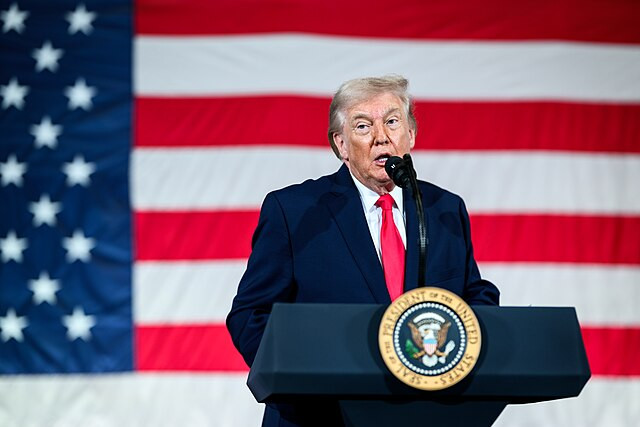
The confrontation followed attacks attributed to Iranian-linked forces against U.S. bases in Jordan. Trump responded by ordering strikes on Iranian targets and warned Tehran against answering the American operation, saying the "failed nation of Iran" would be hit "at a much harder and higher level" if it retaliated.
Iran nevertheless reportedly launched additional strikes, turning the sequence into a test of whether Trump's public warning would deter Tehran or trigger another round of American military action. The supplied article doesn't establish the extent of damage from the Iranian response or whether U.S. personnel were injured.
The episode quickly became ammunition for Trump's domestic critics, particularly on social media, where commentators characterized Iran's response as evidence that Tehran had called the president's bluff. Those claims are political interpretations of the confrontation rather than an independent measure of U.S. deterrence or military strength.
Among the most widely circulated criticism came from U.S.-based political commentator Hal, who posts online as "Hal for NY." He argued in a video that Iran was "humiliating Donald Trump in front of the whole world" by retaliating despite the president's warning.
Hal said Iran had "completely defied him and embarrassed him in front of the world," portraying the exchange as a direct challenge to Trump's credibility.
The commentator broadened his criticism beyond Iran, claiming that other governments were also becoming less responsive to Trump's warnings. He cited Canada, China and European countries in arguing that Trump "has no credibility and he is very weak."
The supplied article doesn't provide evidence establishing that those governments have adopted policies specifically because they view Trump as weak. The comments instead reflect a broader political argument from one of the president's critics about how his foreign policy is perceived abroad.
Hal also raised concerns about reports that Iranian attacks had targeted installations where American military personnel are stationed. He said U.S. troops "may be the ones paying the price for his ineptitude," though the source article doesn't independently verify casualties resulting from the reported strikes.
The criticism gained traction online, where the video received thousands of views and hundreds of comments. One commenter wrote that Trump "does a pretty good job of humiliating himself without anyone's help."
Another wrote, "No one respects Trump. His term can't be over soon enough." A third said, "Iran is humiliating Trump and Trump is humiliating America."
Those comments aren't representative measures of U.S. public opinion, but they illustrate how the latest military exchange has become intertwined with a domestic political argument over Trump's handling of Iran. The dispute centers less on whether Iran retaliated than on what Washington does after Tehran crossed the line Trump publicly drew.
Some reactions focused instead on the risk of further escalation. "The world needs peace," one commenter wrote, while another said, "Trump will not be embarrassed! He does not have any sense of shame!"
Trump's critics have also accused him of struggling to produce a diplomatic settlement with Tehran and pointed to his appeals for ordinary Iranians to challenge their government as evidence that his strategy is under pressure. Such descriptions as Trump "panicking" or being unable to make a deal are characterizations by opponents rather than established facts about the administration's internal deliberations.
The central strategic issue is whether Washington's response to the latest Iranian action reinforces or undermines the deterrent value of Trump's earlier warning. A threat can be intended to discourage an adversary from acting, but Tehran's reported decision to strike despite the president's language has shifted attention toward whether the U.S. will carry out the tougher retaliation Trump promised.