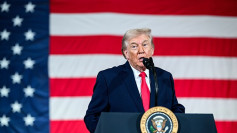
President Donald Trump is making transgender policy a prominent part of his pitch to Republican voters ahead of the 2026 midterm elections, warning that "Transgender will never end" if his party loses ground in Congress and urging supporters to vote as though he were personally on the ballot.
Trump made the remarks during an Aug. 30 interview with former Republican congressman and Fox News host Trey Gowdy. The president argued that retaining Republican control of Congress is necessary to protect policies enacted during his second term and prevent Democrats from reversing them.
"I think we're gonna do very well," Trump told Gowdy. "I'm gonna take a lot of time, and I'm going to help people get elected, if I can."
Trump acknowledged a persistent challenge for Republicans: translating the enthusiasm of his presidential coalition into elections where his name doesn't appear on the ballot. He said his supporters have historically been more likely to participate when they can vote directly for him.
"I see it all the time, that when Trump's on the ballot, they win," Trump said. "When he's not on the ballot, the people don't go to vote, and I'm asking the people ... to get out and vote. Pretend I'm on the ballot."
The president then framed a potential Democratic congressional victory around taxes and cultural issues, including transgender participation in women's sports.
"Our country's going to be in sad shape, because we're gonna go through a lot of things," Trump said. "You're going to have the taxes raised, you're gonna have crazy things happening like the men in women's sports will never end. None of this- Transgender will never end."
Trump didn't explain precisely what he meant by "Transgender will never end," and Gowdy didn't ask him to clarify. In context, the remark followed Trump's reference to transgender participation in women's sports and came as part of a broader warning about policies he believes Democrats would pursue if they gained control of Congress.
The wording is notable because Trump didn't say transgender people themselves should cease to exist. His remarks instead linked "Transgender" to a collection of political and policy disputes that have become recurring themes in his speeches and in Republican campaigns.
Trump has already used executive power during his second administration to reshape federal policy on several of those issues. On his first day back in office, he signed an executive order directing federal agencies to recognize sex as male or female and to remove federal policies and communications his administration characterized as promoting "gender ideology."
His administration has also moved to restrict transgender people from military service. A separate executive order addressed transgender participation in women's and girls' athletics, directing the federal government to pursue policies opposing transgender females competing in female sports categories.
Federal agencies have also become involved in disputes with hospitals, school districts and other institutions over transgender rights and gender-affirming care, according to the supplied article. The administration's documented actions can be distinguished from critics' broader claims about the motivations behind those interventions.
Trump's latest comments are consistent with language he used before returning to the White House. Speaking at AmericaFest in December 2024, he pledged to end what he called "transgender lunacy" and said his administration would establish a federal policy recognizing two genders, male and female.
The broader conservative debate has at times featured more sweeping language. Right-wing commentator Michael Knowles previously called for transgenderism to be eradicated, later saying he meant eliminating the concept "ontologically" rather than advocating violence against transgender people.
Trump's Aug. 30 comments didn't go that far or specify what policies Congress should enact concerning transgender Americans. Instead, he incorporated the issue into his argument that the midterm elections should function as a referendum on his presidency even though he isn't a candidate.
The president closed the discussion by portraying Republican control of Congress as a way for voters to preserve the direction of his administration.
"We've done a great job; we're the most respected country right now in the world; we're more respected than we ever were, and I think people wanna keep it that way, so I think we're gonna win," Trump said.