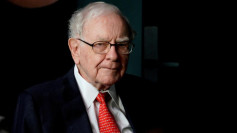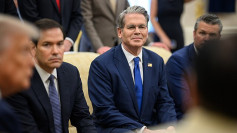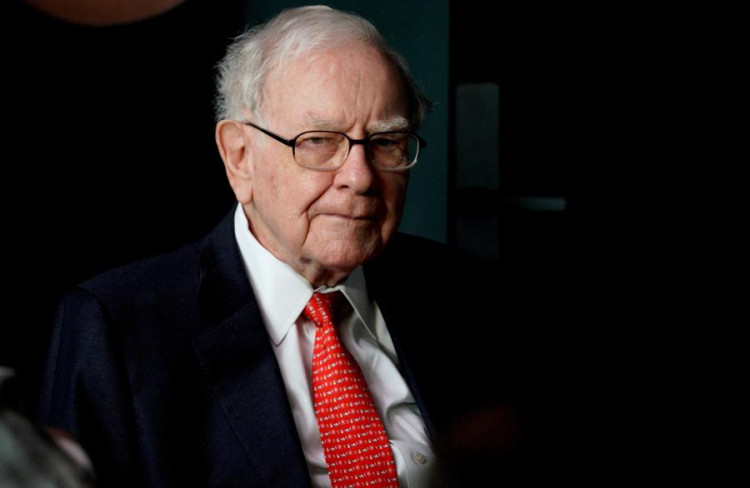
Warren Buffett is stepping down as chairman of Berkshire Hathaway, ending another chapter of his six-decade stewardship of the $1.1 trillion conglomerate nine months after Greg Abel succeeded him as chief executive. Buffett's son Howard Buffett will become chairman, separating oversight of Berkshire's board from the day-to-day leadership now held by Abel.
The 96-year-old Buffett will become chairman emeritus effective immediately and remain a Berkshire director, the Omaha, Neb., company said Friday. Berkshire said he will continue providing his "valued judgment and perspective," while Susan Decker will remain lead independent director.
Buffett took control of Berkshire in 1965, when it was a struggling textile manufacturer, and became chairman and CEO in 1970. He gradually transformed the company into one of America's largest conglomerates, with businesses spanning insurance, railroads, utilities, manufacturing, services and retailing.
His record was built around an investment philosophy that often sounded simple but could require decades of patience. In Berkshire's 1988 shareholder letter, Buffett summarized his approach to owning exceptional businesses with one of his most frequently cited lines: "Our favorite holding period is forever."
Coca-Cola became a defining example. Berkshire began accumulating the shares in 1988 and kept the position for decades, reflecting Buffett's preference for companies with durable brands, predictable economics and the ability to compound capital over long periods.
A year later, Buffett offered another formulation that became central to his investing philosophy: "It's far better to buy a wonderful company at a fair price than a fair company at a wonderful price."
The comment reflected the influence of Charlie Munger, Buffett's longtime business partner, who pushed him away from focusing primarily on statistically cheap companies and toward paying reasonable prices for stronger businesses. Munger died in 2023 at age 99.
Buffett also became known for explaining financial risk in unusually memorable terms. "You only find out who is swimming naked when the tide goes out," he wrote in Berkshire's 2001 annual letter while discussing problems exposed in the insurance business.
His willingness to discuss mistakes became another recurring feature of Berkshire's shareholder communications. In his 2024 annual letter, Buffett wrote: "The cardinal sin is delaying the correction of mistakes," arguing that errors are inevitable but allowing recognized problems to persist can be far more costly.
In 2025, Buffett turned his attention to global trade as President Donald Trump's tariff policies were reshaping commercial relationships. "Trade should not be a weapon," Buffett told Berkshire shareholders at the company's annual meeting, arguing that American prosperity benefits when other countries also become wealthier.
The latest transition had been years in preparation. Buffett surprised shareholders at Berkshire's May 2025 annual meeting by announcing that Abel, his longtime deputy overseeing non-insurance operations, should take over as CEO at year-end. Abel formally assumed the job on Jan. 1.
Buffett subsequently began retreating from some of the public duties that had made him synonymous with Berkshire. In November 2025, he said he would no longer write Berkshire's annual report or spend hours answering questions at the annual meeting. "As the British would say, I'm 'going quiet,'" Buffett wrote.
Howard Buffett, a Berkshire director since 1993, now assumes responsibility for chairing the board. He has led the Howard G. Buffett Foundation since 1999, concentrating on global food security and conflict mitigation, and previously served for nearly a decade as a United Nations World Food Programme goodwill ambassador against hunger.
The arrangement preserves the succession structure Warren Buffett had outlined before relinquishing control: Abel manages Berkshire's businesses while Howard Buffett serves as a guardian of the corporate culture his father spent decades developing.
"Warren's impact on Berkshire and its owners is without parallel in the history of American business," Abel said Friday. "The culture Warren built and the values he championed will remain at the heart of Berkshire, and Howard will be their guardian."
Buffett offered his own shorthand for the division of responsibilities in a letter released with Friday's announcement: "Greg runs the company; Howard will guard its culture and values - both worth more than anything on our balance sheet."