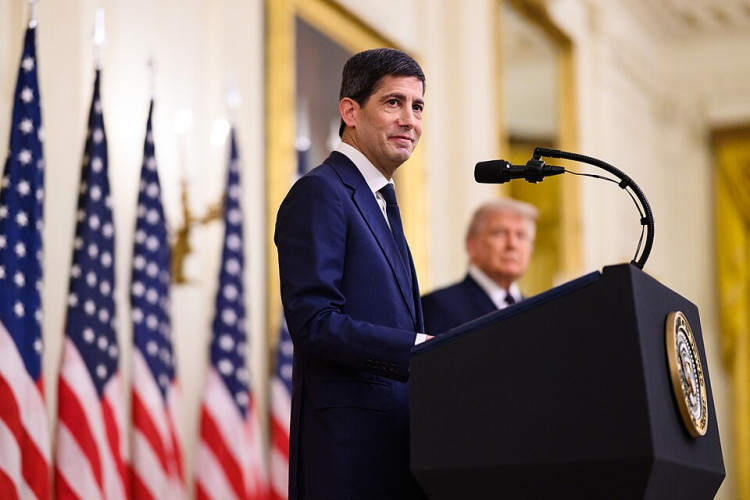
The Federal Reserve is expected to leave interest rates unchanged Wednesday, but persistent inflation is putting pressure on Chairman Kevin Warsh to explain whether September's increase will be followed by further tightening before year-end.
The benchmark rate stands at 3.75% to 4%. Markets overwhelmingly anticipate a pause after last month's quarter-point increase, the first in more than three years, while continuing to price in a strong probability of another move in December.
That leaves Warsh facing a communication challenge: reassure investors that the Fed will contain inflation without committing to a policy path before officials have assessed incoming data. He has sought to reduce the central bank's reliance on forward guidance.
Brett Ryan, senior U.S. economist at Deutsche Bank, expects Warsh to indicate that recent inflation readings support additional tightening.
"However, skipping October allows officials more time to assess trends in the data," Ryan wrote in a client note.
September's consumer price index rose 3.7% from a year earlier, with energy prices a major contributor. Excluding food and energy, inflation reached 2.6%, up 0.3 percentage points from August.
The readings come as mortgage rates above 7% weigh on housing and a subdued labor market presents a mixed picture. Layoffs remain low, but people seeking employment are struggling to find jobs.
September's meeting minutes showed that most Fed participants considered another increase likely appropriate by year-end. Recent comments from Vice Chair Philip Jefferson and New York Fed President John Williams nevertheless pointed toward allowing more time to evaluate conditions.
Former Fed Vice Chair Alan Blinder told Yahoo Finance he expects a "hawkish pause" and argued that clearer guidance would be useful despite Warsh's reluctance to provide it.
"This is a perfect time for clear forward guidance that doesn't quite say, but strongly hints, we're pausing now, but we stand ready to raise again and even give a hint that the next meeting might be the next interest rate hike."
Officials disagree over the risks of waiting. Chicago Fed President Austan Goolsbee has called September's consumer inflation reading "discouraging" but wants more evidence before raising rates again. Cleveland Fed President Beth Hammack has favored smaller increases now to address broadening price pressures.
Former Kansas City Fed President Esther George questioned whether policymakers had adequately explained a pause.
"I haven't heard clearly, 'here's why waiting would be appropriate,'" George said.
The meeting's proximity to the November 3 midterm elections has also drawn debate. Economists including Blinder and Harvard's Ken Rogoff suggested the timing could encourage restraint, while George rejected electoral considerations as inconsistent with central-bank independence.
Other economists question whether further tightening is appropriate at all. Allianz adviser Mohamed El-Erian told CNBC's "Squawk Box" that higher rates would disproportionately burden housing and consumer borrowing while having less impact on technology businesses.
"My problem is that it's the wrong policy measure right now," El-Erian said, arguing instead for "fiscal containment, not monetary tightening."
Citigroup economists forecast a December increase but believe easing inflation could subsequently justify holding rates steady and potentially cutting them next year. Futures pricing cited in the reports puts the probability of a December hike between roughly 70% and more than 80%, reflecting differing market snapshots.