Japan and China entered one of their most tense exchanges of the year after Japan's Air Self-Defense Force scrambled fighters in response to two radar-lock incidents involving Chinese J-15 aircraft southeast of Okinawa, according to reports from Japan Today and The Japan Times. The confrontation unfolded as China's carrier Liaoning conducted expansive air and helicopter operations in the Pacific, placing Japanese and Chinese forces in close proximity near contested airspace.
Japan's Defence Ministry launched SDF jets after tracking the Liaoning's movements through waters off Okinawa, where the carrier group began fighter and helicopter takeoff drills. Hours after the initial scramble, The Japan Times reported that J-15 fighters allegedly locked their fire-control radar on Japanese F-15s twice-once in late afternoon and again during the evening. Radar lock is interpreted by militaries as a hostile act because it signals preparation to engage weapons.
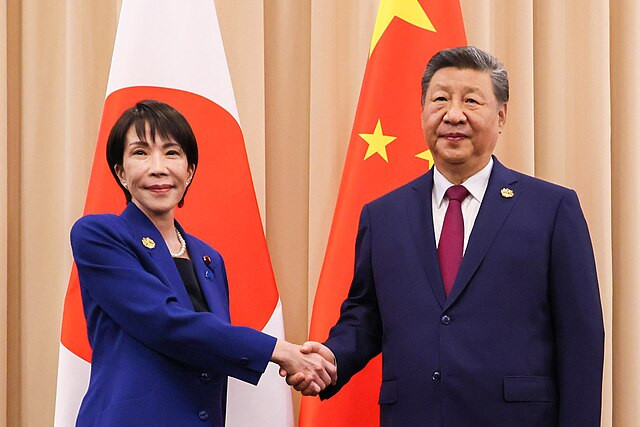
Prime Minister Sanae Takaichi denounced the escalation, calling the radar incidents a dangerous provocation. She said Japan had filed a strong protest and pledged continued vigilance over Chinese military operations in the region. Defence Minister Shinjiro Koizumi said that while no aircraft were damaged, the repeated targeting constituted a direct threat to aviation safety in what Japan considers international airspace.
China dismissed the allegations and accused Japan of manufacturing the confrontation. Chinese defence spokesperson Zhang Xiaogang claimed Japan "maliciously monitored" the training area around the Liaoning and interfered with what Beijing described as legitimate exercises. Mr. Zhang rejected Tokyo's account and framed Japan's protest as an effort to mislead international opinion.
The diverging accounts highlight the increasingly confrontational environment in the East China Sea as China's naval presence expands. The commissioning of China's newest carrier, the Fujian, last month gives Beijing capacity to rotate three carriers, enabling near-constant deployment across the Pacific. Japan has accelerated its own security preparations amid concerns that a crisis in the Taiwan Strait-less than 450 miles from Okinawa-could threaten Japanese territorial and economic stability.
Recent statements by Ms. Takaichi, suggesting Japan may regard an attack on Taiwan as a threat to its survival, have further hardened Beijing's posture. China's carrier operations now place its air wings within routine reach of Japanese airspace, testing the limits of already strained diplomatic channels.
Regional partners echoed Japan's concern. During talks in Tokyo, Australian Defence Minister Richard Marles said the radar targeting was troubling and drew parallels to Australia's previous encounters with Chinese military aircraft. He reaffirmed Australia's commitment to working with Japan to uphold a rules-based order in the Indo-Pacific.
The radar-lock episodes reflect mounting operational confidence from Beijing and more assertive responses from Tokyo. China is pushing its carrier groups farther from the mainland as part of a long-term strategy to expand influence across the Pacific. Japan, meanwhile, is reinforcing air and maritime readiness while deepening security partnerships with allies wary of China's regional ambitions.