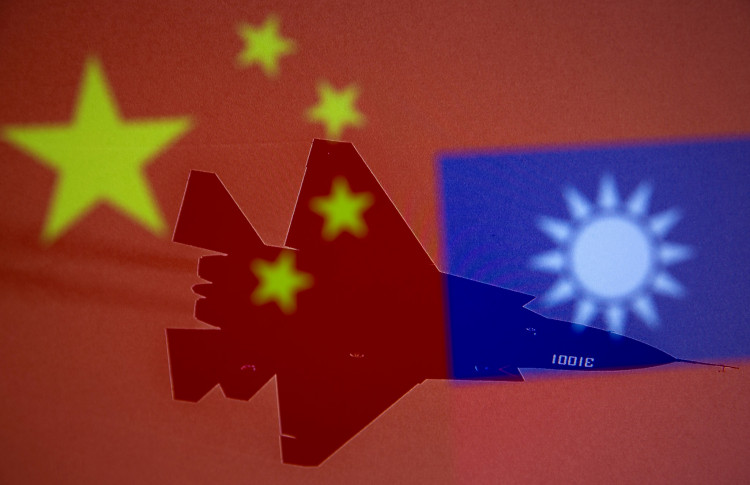
China has launched large-scale live-fire military exercises encircling Taiwan, deploying warships, aircraft and missile forces in a show of force that Beijing says is aimed at deterring separatism and foreign interference. The drills, known as "Justice Mission 2025," come days after the United States approved an $11.1 billion arms package for Taipei and have intensified concerns among regional governments about the risk of escalation in the Taiwan Strait.
The People's Liberation Army's Eastern Theatre Command said the operations simulate a full-spectrum blockade and potential amphibious operations. Senior Colonel Shi Yi, a spokesperson for the command, said the exercises were "a legitimate and necessary action to safeguard China's sovereignty and national unity." Live-fire activity was scheduled across multiple zones, including waters and airspace near Taiwan, forcing flight diversions and maritime warnings.
Chinese state media said the drills involved destroyers, frigates, bombers, drones and long-range artillery, with particular emphasis on controlling access routes around the island. The PLA described the maneuvers as testing "joint seizure of comprehensive superiority," language that analysts interpret as rehearsing isolation of Taiwan from external support.
The escalation followed Washington's announcement of its largest-ever arms package for Taiwan, valued at $11.1 billion, including advanced missiles and radar systems. In response, Beijing announced sanctions against 20 U.S. defense firms and executives. Foreign Ministry spokesman Lin Jian said: "Any sinister schemes to obstruct China's reunification are doomed to fail."
Beijing has also reacted sharply to remarks from Japanese leaders suggesting Tokyo could play a role if conflict erupts in the Taiwan Strait. Chinese authorities warned citizens about travel to Japan and accused Tokyo of stoking confrontation. These developments add to already heightened tensions between China, the U.S. and its regional allies.
Taiwan's Ministry of National Defense said its forces were placed on high alert, scrambling aircraft and deploying naval assets to monitor Chinese movements. The island's coast guard dispatched vessels to shadow PLA ships near key shipping lanes, while military units conducted rapid-response drills. Video released by Taiwan showed U.S.-made HIMARS rocket systems and French-built Mirage 2000 fighter jets participating in readiness exercises.
President Lai Ching-te, whom Beijing accuses of promoting independence, framed the response as deterrence rather than provocation. "We need to keep raising the difficulty so [China] can never meet the standard," he said, referring to preventing any viable invasion scenario. Taiwan is also accelerating development of its "T-Dome" air-defense network as part of record defense spending.
Public reaction on the island appeared muted despite the scale of the drills. A Taipei resident quoted locally said, "We're Taiwanese, not Chinese," reflecting persistent identity sentiment. Taiwan's benchmark stock index reached a record high during the exercises, suggesting investors were largely unfazed by the military posturing.
China has conducted at least six major military exercises around Taiwan since 2022, following heightened U.S. engagement and high-profile visits. Under Eastern Theatre Command chief Yang Zhibin, the drills have become more complex, increasingly integrating civilian vessels and joint-force coordination.
Taiwan's Presidential Office condemned the maneuvers, with spokesperson Karen Kuo stating: "Our country strongly condemns the Chinese authorities for using military intimidation to threaten neighbouring countries." The office said such actions undermine regional stability and violate international norms.