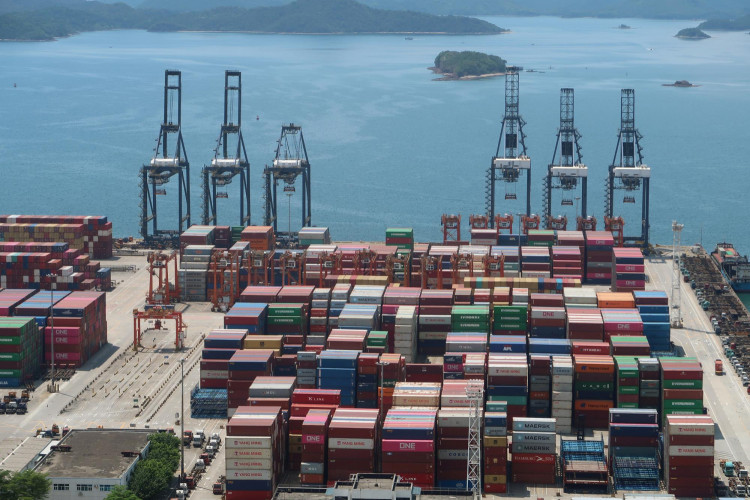
China closed 2025 with a record trade surplus of nearly $1.2 trillion, powered by stronger-than-expected exports to non-U.S. markets even as shipments to the United States plunged under renewed tariff pressure from United States President Donald Trump.
Customs data released Wednesday showed Chinese exports rose 6.6% year-on-year in December, sharply exceeding market expectations and accelerating from November's 5.9% increase. Imports climbed 5.7%, the fastest pace in three months, underscoring resilience in trade flows despite weak domestic demand.
For the full year, exports grew 5.5% while imports were flat, lifting the trade surplus to $1.19 trillion-about 20% higher than in 2024. The figure briefly surpassed $1 trillion for the first time in November, putting China's surplus on par with the annual output of a mid-sized global economy.
Trade with the U.S. deteriorated sharply. Shipments to the American market fell 30% in December and declined 20% over the full year, while imports from the U.S. dropped 14.6%. The slump marked a ninth consecutive monthly decline in December, highlighting the impact of tariffs and export-control measures.
Chinese officials framed the shift as a diversification success. Wang Jun, a vice minister at China's customs administration, said at a press briefing that "with more diversified trading partners, (China's) ability to withstand risks has been significantly enhanced." Exports to Africa jumped 25.8% in 2025, while shipments to the Association of Southeast Asian Nations rose 13.4% and exports to the European Union climbed 8.4%.
Economists warned that the swelling surplus could fuel global backlash. Eswar Prasad of the Brookings Institution said China's surplus would have "as destructive an impact on the global trading system as Trump's tariffs," cautioning that other nations may respond with protectionist barriers.
Fred Neumann, chief Asia economist at HSBC, said, "China's economy remains extraordinarily competitive," adding that export strength reflects "weak domestic demand and attendant excess capacity" as much as productivity gains.
China's reliance on exports has intensified as its $19 trillion economy struggles with deflationary pressure, a deepening property slump and fragile consumer confidence. Consumer prices were flat in 2025, missing Beijing's official target of about 2%.
Zhiwei Zhang, president and chief economist at Pinpoint Asset Management, said, "Strong export growth helps to mitigate the weak domestic demand," and argued that "the government is likely to keep the macro policy stance unchanged at least in Q1."
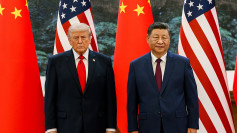
Beijing has taken tentative steps to ease trade friction. China and the U.S. agreed in October to roll back some export controls and tariffs under a one-year truce following talks between Xi Jinping and Trump. China also pledged to buy at least 12 million tons of U.S. soybeans, though December imports rose just 1.3%.
Rare-earth exports rose 12.9% in 2025, even as Beijing curbed shipments of some elements from April, a move analysts viewed as a reminder of China's leverage in trade negotiations. Zichun Huang of Capital Economics said Trump's recent threats "underscore the potential for renewed trade tensions between the U.S. and China."
China is set to release fourth-quarter and full-year GDP data next week, with economists expecting growth of 4.5% in the final quarter, just below Beijing's annual target of around 5%.