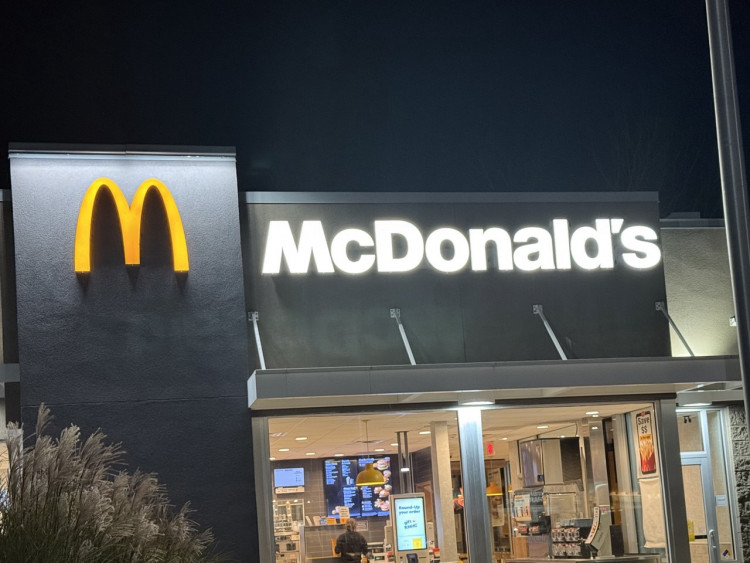
McDonald's has begun testing robot-assisted service at a Shanghai restaurant, adding a new flashpoint to the global debate over automation as restaurant and warehouse operators increasingly use machines to handle tasks once performed by staff.
Videos circulating online showed humanoid and mobile service robots moving across the dining floor of a McDonald's in China, greeting customers and delivering orders. The machines were supplied by Keenon Robotics, whose promotional material described the rollout as part of a pilot aimed at integrating automated service into restaurant operations.
The company has not publicly detailed whether the Shanghai test is limited to a handful of locations or part of a broader strategy in China. But the timing is notable. McDonald's Chief Executive Chris Kempczinski recently told China Daily, "We're growing a lot in China. We believe in the country and we believe in the business. If China delivers the around 4.5 percent GDP growth target, that would certainly be a really healthy number. And 5 percent GDP growth would be fantastic if you can get it. The more you can drive domestic consumption, the more we're gonna be able to invest."
That expansion message is landing alongside a different concern inside the service sector: whether automation that begins as novelty can quickly become labor substitution. In Shanghai, the robot videos drew attention not only because they looked futuristic, but because they put a familiar question directly onto the restaurant floor-how many front-of-house roles remain secure once machines can greet diners, carry trays and navigate crowded aisles.
McDonald's is hardly alone in moving in that direction. Across industries, large employers are pressing deeper into automation as they search for productivity gains, more stable operations and lower long-term labor costs.
Amazon offers the clearest example of that shift. The Wall Street Journal reported in 2025 that the company was nearing a point where robots would outnumber humans in its warehouses, with more than one million robots deployed across its operations. Amazon has also said that about 75% of customer orders are now assisted by robotics at some stage.
Amazon says the technology is intended to work alongside employees, not simply replace them. The company has also said it has upskilled more than 700,000 workers through training programs tied to newer systems.