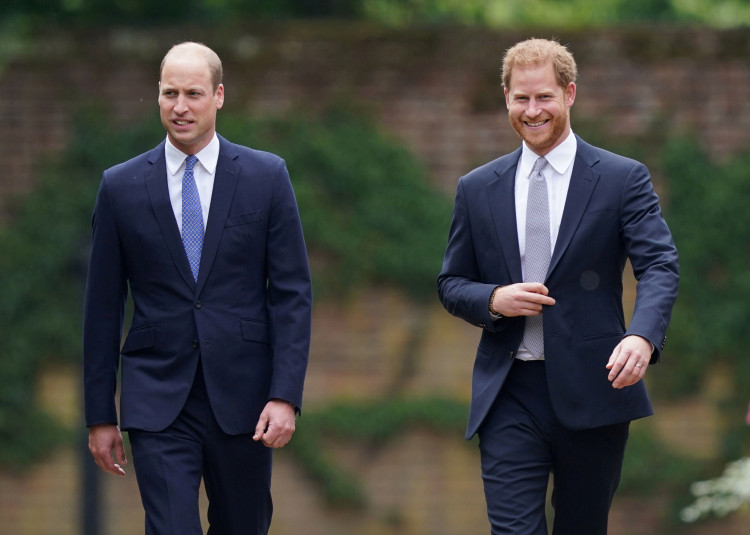
Prince Harry's fractured relationship with Prince William has entered a new phase, with fresh claims suggesting the Duke of Sussex believes his older brother is deliberately working to remove him from the monarchy's inner circle as the royal family's long-running divisions show little sign of healing.
The latest allegations surfaced following reports that Prince Harry and Meghan Markle were not invited to the wedding of Peter Phillips, the son of Princess Anne and one of the late Queen Elizabeth II's grandchildren. While no member of the royal family has publicly commented on the guest list, the reported omission has reignited debate over Harry's place within a family he once stood near the center of.
According to an unnamed source cited in recent reports, Harry believes the distancing is neither accidental nor the natural consequence of years of separation. Instead, the source alleged that the Duke views Prince William as the driving force behind a broader effort to isolate him from senior members of the royal family.
"Harry suspects that William has been on a mission to turn every single family member against him and slowly, but surely, it seems to be working," the source claimed.
The allegations remain unverified, and neither Kensington Palace nor representatives for the Duke and Duchess of Sussex have responded publicly. No evidence has been presented showing that Prince William played any role in decisions surrounding Peter Phillips' wedding invitations.
Nevertheless, the reported exclusion has become symbolic of a wider deterioration in family ties that began after Harry and Meghan stepped back from royal duties in 2020 and relocated to California. Since then, relations have been further strained by a series of televised interviews, the couple's Netflix projects and Harry's memoir, Spare, all of which included criticism of royal life and disclosures about private family matters.
For supporters of Harry, the wedding episode is viewed as another indication that reconciliation remains distant. The same source alleged that Harry was deeply disappointed by the apparent snub and believed there must have been "outside influence" behind the decision.
"He's very hurt that Peter would turn his back on him like this, but says he doesn't actually blame him because he knows how persuasive William can be and how he likes to throw his weight around," the source said.
Whether or not Harry shares those views publicly, royal commentators argue that the broader dispute reflects competing visions for the future of the monarchy. Prince William, as heir to the throne, has increasingly emphasized stability, discipline and institutional protection, while Harry has pursued a more public campaign to explain his grievances and challenge aspects of royal culture.
Royal commentator Helena Chard recently described William's approach as part of a larger strategy rather than a temporary reaction.
"This feels like a permanent royal reset," Chard said. "But William's silence isn't a mystery. It's a strategy."
She added that William's refusal to engage publicly with his brother reflects a belief that distance serves the long-term interests of the monarchy.
"Loyalty cuts both ways, and as they say, 'Betrayal has a long shelf life,'" Chard said. "Prince William is known to take a harder line than some. He's setting his agenda for the monarchy's future. There's a difference between being ruthless and holding people accountable. He's fearless and has a strong moral character."
Other royal observers have focused less on strategy and more on trust. Royal commentator Richard Fitzwilliams argued that Harry's repeated public disclosures have fundamentally altered how William views the relationship.
"William regards his brother as totally untrustworthy," Fitzwilliams said, referring to revelations about private conversations contained in interviews, documentaries and Harry's memoir.
The dispute also reflects a broader transition underway inside the House of Windsor. As King Charles continues his reign and Prince William prepares for his future role as monarch, decisions about who occupies positions of influence within the institution have taken on greater significance.
Fitzwilliams noted that William has spent years defining the principles that will shape his eventual reign.
"William early on laid down the markers for his apprenticeship before becoming king, priority and privacy for his family," he said.