Oil prices surged Thursday as escalating U.S.-Iran attacks on tankers and warships deepened concerns about supplies through the Strait of Hormuz, while top Trump administration officials have privately discussed the possibility that the conflict could persist through the end of President Donald Trump's term.
Brent crude climbed about 4% to as high as $105.26 a barrel, while U.S. benchmark West Texas Intermediate crossed $100 for the first time since May, according to Reuters. The gains followed a new wave of attacks on Gulf shipping that has added pressure to an oil market already missing substantial volumes of Middle Eastern crude.
The market reaction comes as senior administration officials consider a substantially longer timeline for the Iran conflict than Trump has publicly suggested. Vice President JD Vance, Secretary of State Marco Rubio and other senior officials have discussed whether Tehran could withstand the U.S. blockade and continue fighting through the remainder of Trump's presidency, The Wall Street Journal reported.
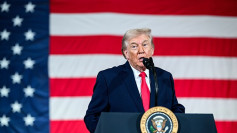
That possibility contrasts with Trump's public forecast Wednesday at the Republican midterm convention in Dallas. "War's going to end immediately after the election because they can't hold out any longer," Trump said, according to the source article. "Right after the election, oil prices are going to be tumbling downward."
The discussions among Trump's advisers don't establish that the administration expects the war to last through the end of his term. They indicate officials are planning for that possibility as the conflict enters its seventh month and neither Washington nor Tehran has accepted the other side's conditions for ending hostilities. The Pentagon has extended deployments and rotated forces through the region as it prepares for a potentially sustained operation, according to The Wall Street Journal.
The immediate pressure on crude intensified after U.S. Central Command said American forces destroyed five Iranian oil tankers on Sept. 8 following attempted ballistic-missile attacks against a U.S. Navy warship. CENTCOM identified the vessels as the Kaviz, Charminar, Horizon 1, Riesco and Derya and said their crews were instructed to abandon the ships before they were struck.
"The U.S. warship successfully evaded the attempted Iranian attacks and continued to patrol regional waters. No American personnel were harmed," CENTCOM said. The command added: "Iran has used the tankers as part of a multibillion-dollar shadow network that funds the IRGC and its regional proxies. Iran has no means by which to defend these vessels."
CENTCOM said the strikes followed earlier attacks on three Iranian crude carriers on Sept. 5 after the Islamic Revolutionary Guard Corps attempted to target a U.S. aircraft carrier and guided-missile destroyer. The U.S. military's account of the encounters represents Washington's description of the events.
Iran has presented a different account of the escalating maritime confrontation. Tehran said the Revolutionary Guard attacked two U.S. vessels and eight oil tankers after they attempted to move through areas Iran had declared "forbidden and unsafe," according to the source article. Reuters reported that Iran claimed attacks against 10 ships following U.S. strikes on Iranian tankers.
The exchanges have magnified the importance of the Strait of Hormuz, the narrow Gulf shipping corridor that before the war carried roughly a fifth of the world's oil and liquefied-natural-gas supplies. Reuters analysis found that despite so-called dark crossings by vessels turning off tracking equipment, roughly one-third of Gulf oil exports remains missing from normal supply flows.
Physical crude markets are showing even greater stress than futures. S&P Global Commodity Insights put Platts Dated Brent at $114.26 a barrel Wednesday, while Middle East Gulf sour-crude exports averaged 5.88 million barrels a day during the second quarter, down 65% from a year earlier. The cost of transporting crude from the Arabian Gulf to the Far East on very large crude carriers also reached a record.
Washington is simultaneously increasing financial pressure on Tehran. The Treasury Department on Tuesday sanctioned 36 targets connected to Iran's aviation sector under Operation Economic Outcast, including airlines, front companies, foreign intermediaries and networks that the U.S. says help Iran obtain aircraft and sensitive technology.
"Under Operation Economic Outcast, we promised severe consequences for those providing financial lifelines to the Iranian regime," Treasury Secretary Scott Bessent said.
"Let this be a warning to anyone doing business with Iran's remaining airlines, all of which we sanctioned today: You are at risk of being cut off from the global financial system," Bessent added, according to the source article.
Treasury said Iran has used ostensibly commercial airlines to transport weapons and personnel and that the latest action is intended to sever remaining financial and procurement channels. The department also directed financial institutions to identify and report networks supporting Iran's aviation industry.
The prospect of a longer conflict is forcing energy analysts to extend their estimates for disrupted Gulf supplies. HSBC analyst Kim Fustier said the oil market might not rebalance until mid-2027, with Hormuz flows potentially reaching about 8 million barrels a day by year-end and 9.5 million by mid-2027-still well below the prewar level of roughly 19 million to 20 million barrels a day.
The U.S. Energy Information Administration estimated Middle Eastern crude-production shut-ins averaged 6.7 million barrels a day in August, up from 5 million in July. It expects disruptions to average 5.7 million barrels a day during the fourth quarter and said most production and trade flows might not return to preconflict levels until the second quarter of 2027.