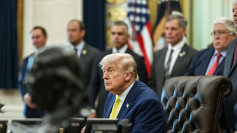
President Donald Trump is facing renewed scrutiny over his fitness for office after a former Republican strategist alleged that the 78-year-old president has become increasingly dependent on a close White House aide who helps manage the information reaching him and plays a key role in publishing his Truth Social posts. The allegations, made by longtime Republican operative turned Trump critic Cheri Jacobus, have reignited debate over decision-making inside the West Wing, though many of her claims remain unverified.
The controversy centers on Natalie Harp, Trump's executive assistant, whose role within the White House has drawn growing attention following recent reporting about her unusually close working relationship with the president. While mainstream reporting has documented Harp's involvement in curating media content and assisting with Trump's social media activity, Jacobus went significantly further, claiming Harp exerts extraordinary influence over the president's thinking and public messaging.
Speaking on her YouTube program Tuesday, Jacobus argued that Trump's reliance on Harp extends well beyond the responsibilities of a senior aide.
According to Jacobus, Harp acts as a gatekeeper by selecting news articles, social media posts and other material she believes will appeal to the president before helping publish content on his Truth Social account. Jacobus claimed the arrangement demonstrates that Trump has become increasingly vulnerable to outside influence.
"The core of her criticism centered on Trump's mental fitness. Jacobus said, "What's bizarre and disturbing is that he is so vulnerable to this sort of undue influence," before adding, "This is somebody who should not be in office he is too old and too mentally feeble."
Those remarks reflect Jacobus' personal assessment rather than any official medical evaluation or independent finding regarding the president's cognitive abilities.
Questions surrounding Harp's influence emerged earlier this year through reporting that described her daily responsibilities inside the White House.
According to reporting cited in the source material, Harp reviews conservative media outlets and online content before compiling material for Trump's review. The reporting also said she assists with publishing posts on the president's Truth Social account after receiving his approval, giving her an unusually visible role in shaping the flow of information surrounding the president's public communications.
Additional details about Harp's relationship with Trump appeared in Regime Change, a book by New York Times reporters Maggie Haberman and Jonathan Swan.
The book describes Harp leaving handwritten notes expressing personal devotion to the president, including the message, "You are all that matters to me." Jacobus cited those accounts while arguing that Harp's relationship with Trump has unsettled some White House staff members.
"They've raised alarms about her feeding the president unhinged online content and being the driving force behind his bizarre Truth Social posts," Jacobus said during her broadcast.
She also claimed Harp's influence has become a source of concern inside the administration.
"She's got this devotion to Trump that's just disturbing. Very, very disturbing. And other staff at the White House are concerned," Jacobus said. She later added, "So it looks like this crazy, stalker-ish person, this Natalie Harp, is the one who makes the decisions in this White House. Think about that. It's frightening."
Neither the White House nor Harp has publicly responded to Jacobus' latest allegations.
Importantly, Jacobus did not present documentary evidence supporting her assertions regarding Trump's cognitive condition or Harp's alleged authority over White House decision-making. While reporting by mainstream news organizations has documented Harp's close proximity to the president and her role in assisting with his communications, those reports have not concluded that she directs presidential decisions or exercises the level of control described by Jacobus.