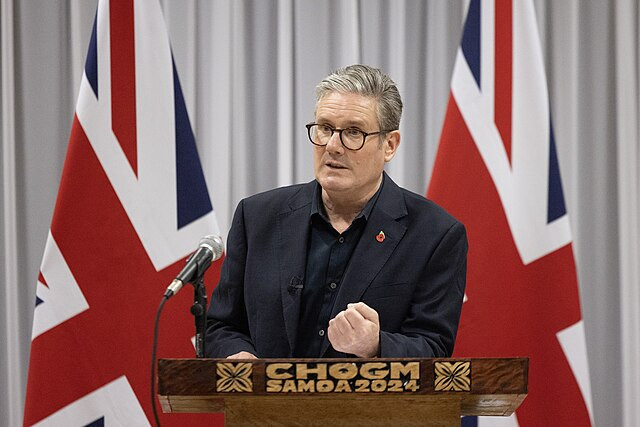
British Prime Minister Sir Keir Starmer is set to deliver a formal state apology in Parliament on Thursday for one of the darkest chapters in modern British social policy, acknowledging the role successive governments played in a system that saw an estimated 185,000 babies taken from unmarried mothers between 1949 and 1976.
The apology follows years of campaigning by birth mothers, adoptees and advocacy groups who argue that thousands of women were pressured, coerced or shamed into surrendering their children for adoption during an era when unmarried pregnancy carried deep social stigma. The announcement also comes after multiple parliamentary investigations concluded that government policies helped create the conditions that allowed the practice to flourish.
Before addressing Parliament, Starmer is expected to meet campaigners at 10 Downing Street, including former Labour MP Ann Keen, who has spent years advocating for official recognition of those affected.
Speaking to BBC Radio 4's Today programme, Keen described her own experience after becoming pregnant at age 17 in 1966. She said she was sent to a mother-and-baby home in Swansea and had no control over her son's future.
"I didn't have a say" in her son's adoption, Keen told the BBC. She added: "We all need this apology because we have always been accused of giving up our babies and we didn't give them up."
Keen also said campaigners had been "waiting a long time" for the government to acknowledge what happened, while recognizing that officials had faced a complex historical issue. For many women, the apology represents not only political recognition but also an opportunity to challenge decades of shame attached to decisions they say were never truly theirs to make.
The government's decision follows recommendations issued in March by the House of Commons Education Committee. After examining historical evidence, lawmakers concluded that official policies had "shaped the environment in which unmarried mothers were often shamed and coerced into having their children put up for adoption."
The committee recommended that the government issue a formal apology without delay while also improving access to adoption records and expanding support services for people attempting to reconnect with biological relatives. Although lawmakers stopped short of recommending financial compensation, they urged ministers to "rigorously assess" how governments in Australia, Northern Ireland and the Republic of Ireland have addressed similar historical injustices.
The Education Committee's findings built upon earlier recommendations from Parliament's Joint Committee on Human Rights, which called for a formal state apology in 2022. At the time, the previous Conservative government expressed regret but declined to issue an official apology, saying it was "sorry on behalf of society" while arguing the state had not directly endorsed the practices.
Education Secretary Bridget Phillipson announced two weeks ago that the Labour government would take a different approach.
"The prime minister will have more to say on this shameful period in our history, reflecting the gravity of what has happened," Phillipson said.
The issue has also prompted responses from religious institutions that operated many of the mother-and-baby homes involved in the adoption system. The Joint Committee on Human Rights concluded that the state had been "aided in enacting its policies by charities and religious institutions," many of which managed facilities where unmarried mothers stayed before giving birth.
In June, the Church of England issued its own formal apology. Archbishop of Canterbury Dame Sarah Mullally acknowledged the suffering experienced by women and families affected by the system.
Addressing survivors, Mullally said they had endured "pain and trauma and suffering and fear when you should have received care and compassion." She added: "You have nothing to be ashamed of. The shame is ours."
Personal testimony has remained central to the campaign. Gaynor Weatherly, whose mother was 16 when she gave birth in 1963, previously told the BBC that although she had built a happy family life herself, she still felt "cheated out of a different life."
Another campaigner, Diana Defries, recalled being separated from her newborn daughter immediately after childbirth.
"I yelled to bring her back, but the nurse then just walked past me and put my daughter on a table out of my reach," she said.
The planned apology also places England alongside other parts of the United Kingdom that have already acknowledged historical forced adoption practices. The governments of Scotland and Wales both issued formal apologies in 2023, while Northern Ireland is expected to do so after completing an ongoing public inquiry into mother-and-baby institutions, Magdalene laundries and workhouses.