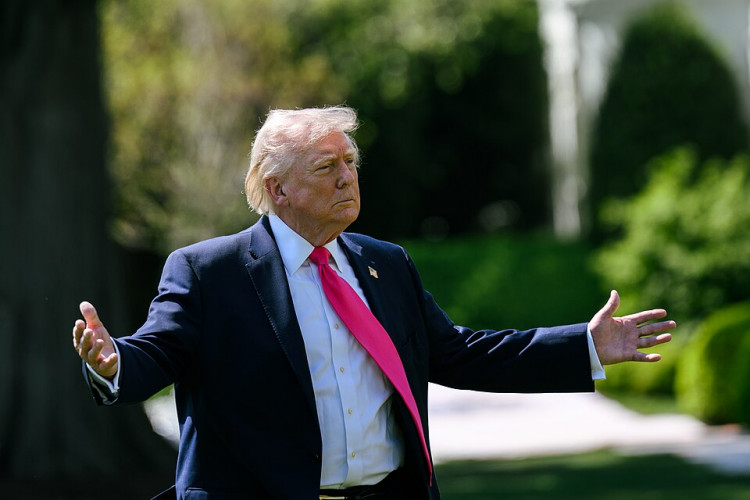
President Donald Trump renewed his argument that the United States should acquire Greenland during the NATO summit in Turkey, prompting an immediate response from Danish Prime Minister Mette Frederiksen, who reiterated that the Arctic territory is "not for sale" and stressed that Greenland's future must be determined by its own people.
The latest exchange revives a diplomatic dispute that has strained relations between Washington, Copenhagen and Greenland's leadership since Trump first expressed interest in acquiring the world's largest island. Although no formal U.S. proposal has been announced, Trump's latest remarks have again raised questions about Arctic security, NATO unity and the strategic competition unfolding in the region.
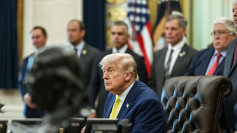
Speaking alongside NATO leaders, Trump argued that Greenland's significance extends well beyond U.S. national interests.
"Greenland is very important" for the United States and "not for Denmark," Trump said. "We need it for protection of the world, not just the United States."
Frederiksen responded by emphasizing both Greenland's right to self-determination and Denmark's commitment to the NATO alliance.
"We hope that all, including all allies will respect the Greenlandic people's right for self-determination," the Danish prime minister said during the summit.
She also reaffirmed Denmark's defense obligations within the alliance, stating, "We are ready to defend every inch of NATO, including our own territory."
"But one of the reasons why we have built NATO, many, many years ago, is if anything happens to one of us, then everybody should stand up for each other," Frederiksen added.
The disagreement comes months after Greenlandic leaders criticized repeated U.S. statements regarding the island's future. Greenland Prime Minister Jens-Frederik Nielsen said earlier this year that Trump's rhetoric had unsettled many residents of the semi-autonomous Danish territory.
Speaking to NBC News, Nielsen described the pressure as "an unacceptable pressure to put on the Greenlandic people."
"A lot of people don't feel safe," Nielsen said. "Some have been scared. Now it's turning into anger."
Asked whether he believed the United States could ultimately use force to pressure Denmark or Greenland, Nielsen replied, "of course."
"The Greenlandic people, a lot of them thought that way: We might be next," he added. "And I know other countries also think like that."
The renewed political dispute has also drawn attention to Denmark's military planning in the Arctic. Reports from Danish broadcaster DR said Copenhagen treated Trump's earlier comments seriously enough to incorporate contingency preparations into military exercises conducted this year.
According to DR, the "Arctic Endurance" exercise included the deployment of troops, blood reserves and explosives under the cover of routine training. The report cited military officials who said the preparations intensified following international developments that heightened concerns about regional security.
One military official quoted by DR explained the reasoning behind the planning.
"As Trump constantly said he wanted to buy Greenland and then we saw what happened in Venezuela, we had to seriously consider all possible scenarios," the official said.
The officer added that allied personnel from France, Germany and Sweden participated in the exercises, saying, "There was no ambiguity."
Separate reports indicated that Denmark also reinforced its military presence in Greenland earlier this year. DR reported that military orders authorized additional troop deployments beginning on January 13, as Danish officials assessed evolving security risks in the Arctic.