Israeli intelligence believes Iran has relocated thousands of nuclear centrifuges to the heavily fortified Pickaxe Mountain complex near Natanz, according to a report by The Wall Street Journal, a development that comes as President Donald Trump warns the United States could strike the site and the White House weighs whether to pursue a ceasefire or expand military operations against Tehran.
The assessment, shared by Israeli officials with their U.S. counterparts, reportedly concludes that the transfer occurred last fall following the 12-day conflict that ended with U.S. strikes on Iran's principal nuclear facilities. If accurate, the reported relocation would place key elements of Iran's nuclear infrastructure inside one of the country's most heavily protected underground complexes.
Pickaxe Mountain has become an increasing focus for military planners because, unlike several other Iranian nuclear sites, it has not been targeted during previous rounds of U.S. or Israeli military action. According to The Times of Israel, the mountain is part of the broader Natanz nuclear complex and contains two tunnel systems that many experts believe are beyond the reach of even the United States' most powerful bunker-buster munitions.
The site's strategic importance has been recognized for years. Earlier this year, International Atomic Energy Agency Director General Rafael Grossi recalled that Iran had informed the agency in 2021 that it intended to "have nuclear activity" inside the mountain.
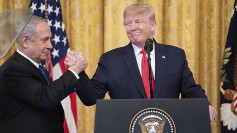
The latest intelligence report surfaced days after Trump publicly identified Pickaxe Mountain as a potential future military target. Speaking about Iran's nuclear program, the president suggested the site could be attacked if the United States determined nuclear work was continuing there.
"We see no activity there. They're not doing well with their nuclear situation. Every time we hear about it, we blow it up. So they don't like talking about it. But we'll probably give Pickaxe a shot relatively soon," Trump said.
The president's remarks came as diplomatic and military planning continued simultaneously. According to Axios, Trump has not reached a final decision on whether to intensify the conflict or support ongoing mediation efforts aimed at securing a temporary ceasefire.
Officials cited by Axios reportedly believe the coming days will be critical in determining whether negotiations succeed or whether military operations expand further. While Washington has encouraged Israel to avoid actions that could undermine diplomatic efforts, U.S. officials are also preparing contingency plans should the conflict widen.
Several regional mediators-including Qatar, Egypt and Pakistan-have reportedly proposed a 10-day ceasefire that would halt hostilities, reopen shipping through the Strait of Hormuz and create time for diplomatic negotiations surrounding the existing Memorandum of Understanding.
According to the reporting, however, neither side has publicly indicated a willingness to accept the proposal.
Military operations have continued while diplomatic efforts remain uncertain. U.S. Central Command announced it had completed a 10th consecutive night of strikes targeting Iranian military capabilities.
The command said the latest operations were intended to "degrade Iran's ability to continue attacking commercial vessels flowing through the Strait of Hormuz."
The reported intelligence regarding Pickaxe Mountain has added another layer of uncertainty to assessments of Iran's nuclear program. Neither Israeli officials nor the U.S. government have publicly released evidence supporting the reported relocation of centrifuges, and Iran has not commented publicly on the claims.
If the assessment proves accurate, analysts say it could complicate future military planning by placing additional nuclear infrastructure inside a facility believed to offer significantly greater protection than previously targeted sites. At the same time, Trump's public threat against Pickaxe Mountain underscores how the location has emerged as a potential focal point should diplomacy fail and the conflict enter another phase of escalation, even as negotiations and military preparations continue in parallel.