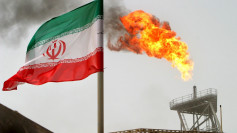
Oil prices climbed above $100 a barrel Wednesday for the first time since July as the U.S. and Iran intensified attacks on tankers and military targets around the Strait of Hormuz, raising the risk that a six-month conflict could further restrict one of the world's most important energy corridors.
Brent crude, the global benchmark, rose more than 2% to trade above $100 a barrel Wednesday morning, while West Texas Intermediate advanced above $95. The latest gains extend a roughly 25% increase in Brent since early August and come as shipping through Hormuz remains well below recent averages.
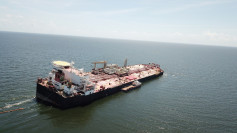
The immediate catalyst was a sharp escalation at sea. U.S. Central Command said American forces destroyed five Iranian crude-oil carriers Tuesday after attempted missile attacks on a U.S. Navy warship over the previous two days. CENTCOM said no U.S. personnel were harmed.
Iran responded by attacking vessels near the Strait of Hormuz and firing ballistic missiles at a U.S. base in Jordan, according to Reuters. Iranian forces said they targeted ships attempting to transit areas Tehran had declared unsafe, while the Islamic Revolutionary Guard Corps signaled that it could broaden its maritime restrictions.
The attacks are beginning to show up in physical shipping flows. Preliminary Kpler data showed only six commodity vessels passed through Hormuz on Tuesday, compared with nine Monday and a 10-day average of 12. Before the conflict disrupted traffic, roughly 125 commercial vessels moved through the strait each day, carrying around one-fifth of global oil and liquefied-natural-gas supplies.
The maritime confrontation follows earlier U.S. strikes against Iranian oil shipping. On Sept. 5, CENTCOM said it attacked three Iranian crude carriers after the Islamic Revolutionary Guard Corps fired ballistic missiles toward two U.S. Navy warships. An American aircraft carrier and guided-missile destroyer evaded the attacks, according to the command.
"The U.S. warship successfully evaded the attempted Iranian attacks and continued to patrol regional waters. No American personnel were harmed," CENTCOM said in describing the latest confrontation, according to the source article. The command said the tankers were part of what it described as a multibillion-dollar network financing the IRGC and affiliated groups.
Washington is simultaneously increasing financial pressure on Tehran. The Treasury Department said Tuesday that its Office of Foreign Assets Control sanctioned 36 targets connected with Iran's aviation sector under the Trump administration's Operation Economic Outcast campaign. The measures cover Iranian airlines as well as intermediaries and procurement networks accused by Washington of helping Iran obtain aircraft and sensitive technology.
"Under Operation Economic Outcast, we promised severe consequences for those providing financial lifelines to the Iranian regime," Treasury Secretary Scott Bessent said, according to the source article. "Let this be a warning to anyone doing business with Iran's remaining airlines, all of which we sanctioned today: You are at risk of being cut off from the global financial system."
The widening confrontation has prompted Wall Street banks to reassess their assumptions for energy prices. Goldman Sachs raised its December forecasts by $5 a barrel, putting Brent at $85 and WTI at $80, while its 2027 estimates now stand at $80 and $75, respectively. Those baseline forecasts assume that current disruptions eventually ease and remain well below Wednesday's spot prices.
A more severe supply shock would produce a substantially different outcome. Goldman Sachs said Brent could rise as high as $120 a barrel if attacks against vessels intensify and Middle Eastern shipping disruptions broaden, while prices could retreat toward $80 if regional exports return to normal levels.
"Events over the last few days do suggest that the risk of shipping disruptions broadening and intensifying is an important one," Daan Struyven, Goldman Sachs's co-head of global commodities research, said in an interview with Bloomberg TV.
Oil markets have so far avoided a still larger price spike because Gulf producers continue moving some crude through alternative routes and non-OPEC producers including the U.S., Canada and Guyana have increased supply. Weakening Chinese demand and Beijing's large inventories have also provided a buffer against lost Middle Eastern barrels.
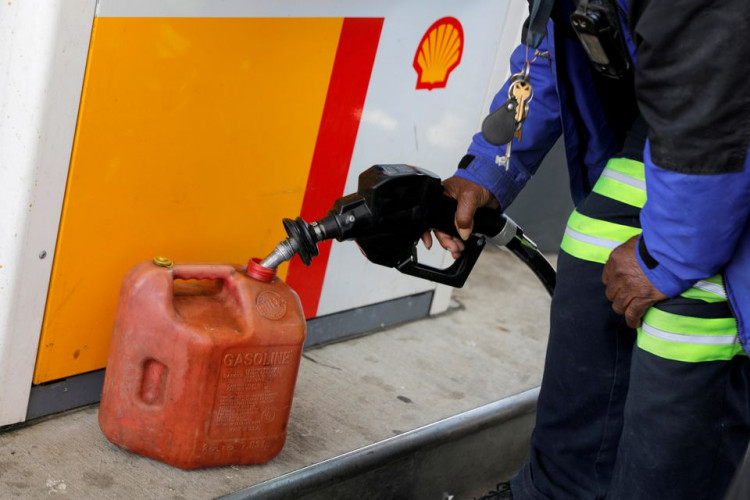
Physical markets nevertheless point to growing stress. Reuters reported that spot premiums for Dubai and Oman crude have returned to levels last seen in April, while Oman futures reached $121.68 Wednesday. U.S. diesel prices have also surged as refiners contend with tightening supplies and disruption to Gulf exports.