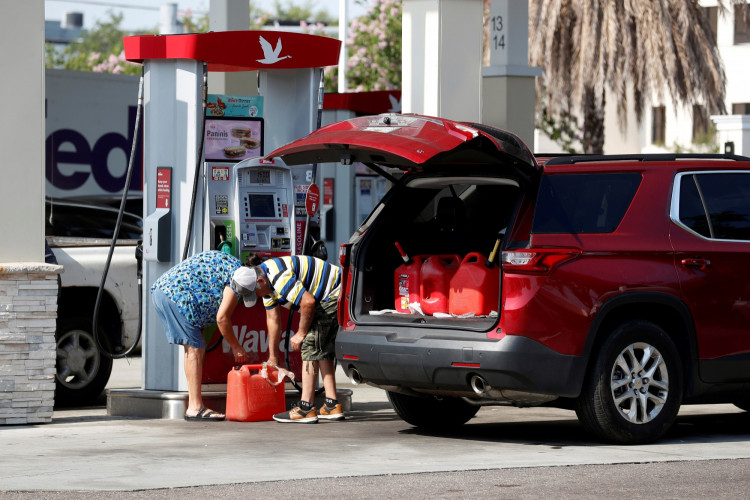
Gasoline prices across the United States are climbing rapidly as escalating tensions involving Iran disrupt global oil flows, pushing the national average price for regular fuel to $3.53 a gallon and raising the prospect that prices could soon breach $4 nationwide.
Data from AAA and GasBuddy show the national average jumped 48 cents in a single week as of March 10, marking the fastest pace of increase since the early months of the Russia-Ukraine war in 2022. The surge comes as maritime traffic through the Strait of Hormuz-one of the world's most critical oil shipping corridors-has slowed dramatically amid rising conflict involving the United States, Israel and Iran.
Roughly 20 million barrels of crude oil and liquefied natural gas typically pass through the narrow waterway each day. The disruption has pushed global energy markets higher, with Brent crude climbing above $100 a barrel and sending fuel costs sharply upward for American drivers.
Energy analysts say the current trajectory could push pump prices significantly higher in the coming weeks. Premium gasoline in several states is already trading above $4 a gallon, and broader increases are expected if shipping disruptions persist.
The fuel surge is arriving at a delicate moment for the U.S. economy, which has shown signs of slowing even as household financial pressures remain elevated. Recent data from the Bureau of Labor Statistics indicate that February's nonfarm payrolls unexpectedly declined by 92,000 jobs, reversing the 126,000 gain recorded the previous month.
The report marked the third decline in employment growth within five months and pushed the national unemployment rate to 4.4%, slightly above economists' expectations of 4.3%. A strike involving roughly 30,000 healthcare workers contributed to the drop, though economists say the broader trend suggests a cooling labor market.
At the same time, consumer finances remain strained by historically high borrowing costs and mounting household debt. Federal data show total credit-card balances reached $1.28 trillion in the fourth quarter of 2025, a 5.5% increase from a year earlier.
Key indicators shaping the economic outlook include:
- National average gasoline price: $3.53 per gallon
- Weekly fuel price change: +48 cents (about 14%)
- U.S. unemployment rate: 4.4%
- Total credit-card debt: $1.28 trillion
- Average credit-card APR: 20.97%
Nearly 47% of credit-card holders carry balances month to month, and many borrowers have remained in debt for more than a year, according to industry data.
Economists warn that higher fuel costs could function as a "hidden tax" on consumers, eroding disposable income and potentially slowing retail spending. Rising gasoline costs historically ripple through the broader economy by raising transportation costs for businesses and increasing prices for goods and services.
Financial advisers say households facing higher energy bills should reassess budgets before fuel costs climb further. Some analysts recommend calculating transportation expenses using an assumed gasoline price of $4.50 per gallon to prepare for potential volatility in global oil markets.
High-interest credit-card debt remains one of the most significant vulnerabilities for many households. Bruce McClary of the National Foundation for Credit Counselling said reducing reliance on revolving credit can provide essential flexibility as energy costs climb.
McClary said that lowering credit-card balances can create the "critical breathing room" necessary for families coping with rising expenses.
Some financial advisers are also encouraging consumers to explore balance-transfer credit cards that offer temporary 0% APR promotional periods, allowing borrowers to pay down principal without accumulating additional interest. Others suggest contacting credit-card issuers directly to negotiate temporary hardship rate reductions.
Households facing deeper financial stress sometimes turn to debt-relief programs that negotiate repayment plans with creditors, though experts caution such arrangements can significantly affect credit scores.
Beyond transportation costs, energy volatility may also affect household utility bills. Some financial planners suggest enrolling in utility "level payment plans," which average annual energy usage into equal monthly payments to smooth seasonal spikes in heating and cooling expenses.