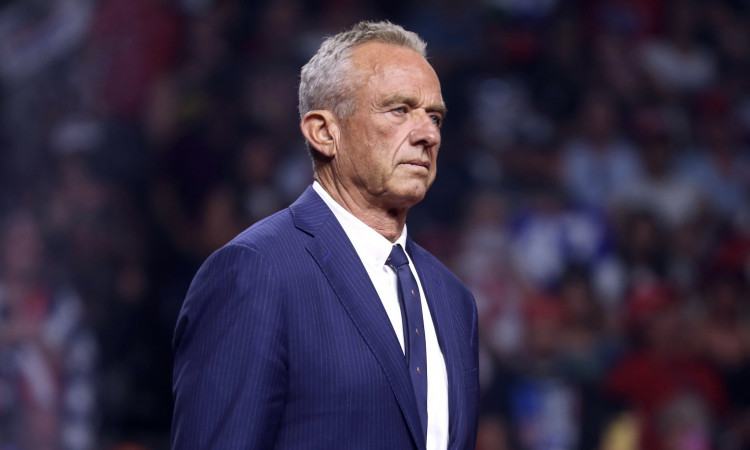
The Centers for Disease Control and Prevention has begun urgently recruiting volunteer airport screeners as a rapidly expanding Ebola outbreak in Central Africa pushes past 1,000 suspected and confirmed cases, exposing the strain on a public-health agency that has undergone sweeping workforce cuts under Health Secretary Robert F. Kennedy Jr..
Internal communications reviewed by Bloomberg News, Reuters and ABC News show acting CDC director Jay Bhattacharya appealed directly to remaining agency staff this week for volunteers willing to deploy to major U.S. airports to conduct Ebola screening operations.
The request came as the World Health Organization intensified warnings over the outbreak centered in the Democratic Republic of the Congo and neighboring Uganda, where health authorities are battling the Bundibugyo strain of Ebola - a virus for which no approved vaccine or targeted treatment currently exists.
According to the internal memo, volunteers would be tasked with monitoring arriving travelers for symptoms, conducting temperature checks and referring suspected cases for additional medical evaluation.
The screenings are now focused at three major U.S. hubs:
- Washington Dulles International Airport
- Hartsfield-Jackson Atlanta International Airport
- George Bush Intercontinental Airport
Travelers who visited Congo, Uganda or South Sudan within the previous 21 days are being routed through those airports under new Department of Homeland Security directives issued under Title 42 authority.
The emergency recruitment drive arrives after a series of aggressive staffing reductions reshaped the CDC over the past year.
In 2025, the Department of Health and Human Services and the Department of Government Efficiency, widely known as DOGE, announced plans to eliminate roughly 10,000 federal health positions, reducing overall HHS staffing from 82,000 employees to approximately 62,000.
The CDC alone reportedly lost about 2,400 workers during the initial cuts.
A second wave followed during the October 2025 government shutdown, when more than 1,000 CDC scientists, physicians and public-health personnel were dismissed in a single round of reductions. Among the casualties was the office overseeing the CDC's Global Health Center - the division specifically responsible for identifying and containing international outbreaks before they reach U.S. borders.
Public-health experts interviewed by NPR and other outlets warned at the time that the cuts would damage institutional expertise and emergency-response capacity.
Now, critics argue, the Ebola outbreak has become the first major stress test of that downsized system.
The outbreak itself has expanded rapidly across eastern Congo.
The World Health Organization declared a Public Health Emergency of International Concern on 16 May. As of 25 May, Congo's Ministry of Health reported:
- 105 confirmed Ebola cases
- 10 confirmed deaths
- 906 suspected cases
- 223 suspected deaths
Cases have spread through Ituri, North Kivu and South Kivu provinces, regions already destabilized by conflict, population displacement and fragile medical infrastructure.
Uganda has also confirmed infections linked to cross-border transmission, including at least one death.
According to European Centre for Disease Prevention and Control data published this week, the broader outbreak has now surpassed 1,000 suspected and confirmed cases combined.
The Bundibugyo strain presents a particularly difficult challenge for health authorities.
Unlike the more familiar Zaire strain of Ebola - for which the Ervebo vaccine exists - Bundibugyo currently has no licensed vaccine or approved therapeutic treatment. International health agencies therefore remain heavily dependent on traditional outbreak-control methods including isolation, contact tracing and border monitoring.