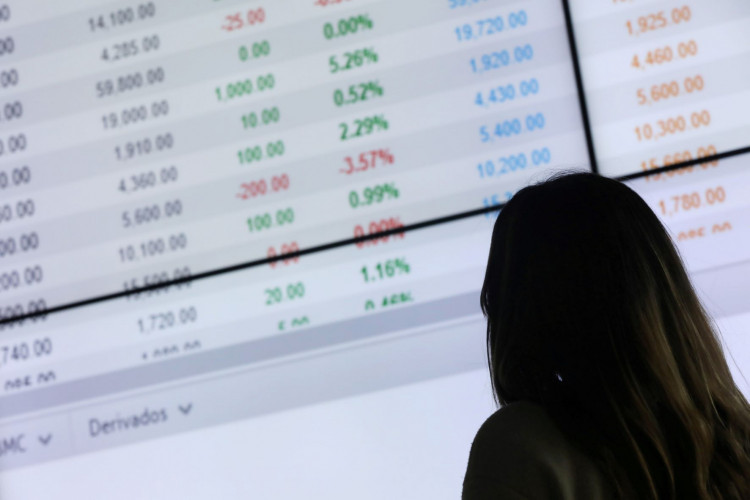
South Korea's stock market suffered its sharpest selloff in more than three months on Tuesday, with the benchmark KOSPI index plunging 10% as investors dumped technology shares amid growing concerns that the artificial intelligence-driven rally that powered global markets higher may have run ahead of fundamentals.
The decline sent shockwaves through markets from Seoul to New York, dragging down semiconductor manufacturers, AI-linked companies and major technology stocks. The selloff was severe enough to trigger an index-wide trading halt in South Korea after shares of Samsung Electronics and SK Hynix, the country's two largest technology companies, each fell more than 12%.
The rout came just one day after the KOSPI reached a record high, highlighting how quickly sentiment has shifted in markets that had become heavily concentrated in a small group of AI beneficiaries.
Because Samsung and SK Hynix account for more than half of the KOSPI's market capitalization, their declines amplified pressure across the broader market. Investors who had piled into semiconductor and AI-related stocks during recent months suddenly found themselves racing for the exits as concerns mounted over stretched valuations and crowded positioning.
South Korea's financial regulators also came under scrutiny. Reuters reported that Lee Chan-Jin, head of the country's market watchdog, suggested authorities may have moved too aggressively in approving leveraged investment products tied to some of the market's most popular stocks.
The selloff was not confined to Asia. European equities traded lower throughout the session, while U.S. stock futures pointed to additional weakness ahead of Wall Street's opening bell.
Market participants increasingly linked the volatility to growing unease surrounding the AI trade that has dominated global investing for much of the past two years.
Andrew Slimmon, senior portfolio manager at Morgan Stanley Investment Management, told CNBC that the decline reflected positioning pressures rather than a collapse in the underlying AI story.
"The AI beneficiaries are the sell off and I don't think they're expensive, but they're crowded," Slimmon said.
"It's captured kind-of the zeitgeist of the momentum traders and when that happens, you're going to have sharp sell offs like we're having. I'd argue it's healthy."
Signs of weakness had already emerged in U.S. markets. On Monday, the S&P 500 fell 0.4%, while the Nasdaq Composite dropped 1.3% as investors rotated out of large-cap technology names and semiconductor stocks.
Several developments intensified concerns about leadership within the AI sector. CNBC reported that Alphabet shares fell 5% after the departure of key artificial intelligence executives. Noam Shazeer, president of engineering and co-lead of Gemini models, is reportedly leaving to join OpenAI, while DeepMind executive John Jumper is departing for Anthropic.
Other major technology companies also declined, including Amazon, Meta Platforms and Microsoft.
One of the steepest individual losses came from Elon Musk's SpaceX, which fell more than 16%, marking its third consecutive day of declines. The company announced a bond offering Monday, stating that proceeds would be used for bridge financing and general corporate purposes.
According to CNBC, reports last week suggested SpaceX was seeking to raise approximately $20 billion, with part of the financing potentially supporting ambitious artificial intelligence initiatives, including plans involving space-based data center infrastructure.