Russia is rapidly expanding electronic warfare capabilities and overhauling battlefield logistics to counter Ukraine's increasingly effective long-range drone campaign, according to Ukrainian military personnel interviewed by Reuters. The changes include deploying systems designed to disrupt SpaceX's Starlink satellite network, disguising military fuel shipments as civilian vehicles and restructuring supply convoys to reduce exposure to Ukrainian unmanned aircraft.
The reported adaptations underscore how Ukraine's growing ability to strike military targets far behind Russian front lines has forced Moscow to rethink both communications and logistics. Ukrainian officials say their mid-range drone operations have become one of Kyiv's most effective tools for disrupting Russian supply chains, while military analysts warn the evolving technological contest could reshape the next phase of the war.
According to Reuters, Ukrainian drone commanders operating in the southern Zaporizhzhia region said Russian forces have significantly intensified efforts to interfere with Starlink-enabled drone operations. The satellite internet system has become a central component of Ukraine's battlefield communications since Russia's full-scale invasion, allowing drone operators to maintain long-distance control even where conventional communications infrastructure has been damaged.
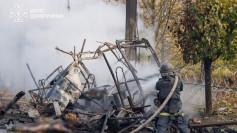
Ukrainian officials argue that those capabilities have enabled repeated attacks on fuel depots, command centers, air-defense systems and logistics hubs located well behind Russian positions. The sustained campaign has also contributed to fuel shortages in Russian-occupied Crimea, according to Ukrainian military officials cited by Reuters.
Serhii Beskrestnov, an adviser to Ukraine's Defense Ministry, told Reuters that Russian forces are deploying an electronic warfare system known as the Volna Kupol Garant. According to Beskrestnov, the equipment can generate a signal capable of disrupting Starlink connectivity across an area of roughly 20 square kilometers (7.7 square miles).
Beskrestnov said Ukrainian forces have identified approximately 10 such systems and have prioritized them as high-value targets.
Members of Ukraine's 422nd Unmanned Systems Regiment told Reuters they participated in operations that destroyed two of the installations. One system, they said, was eliminated only hours after being detected during a joint operation involving Ukraine's Security Service (SBU).
A Ukrainian drone commander using the callsign "Dyryhent" told Reuters that Starlink-connected drones resumed normal operations immediately after one jammer was destroyed, highlighting the importance both militaries now place on control of the electromagnetic spectrum.
Reuters noted that it could not independently verify the battlefield claims made by Ukrainian commanders or confirm Russia's reported countermeasures. SpaceX also did not respond to Reuters' request for comment regarding the reported attempts to interfere with Starlink.
The battlefield adjustments extend beyond electronic warfare. Ukrainian commanders told Reuters that Russian forces have increasingly abandoned traditional military transport methods in favor of vehicles designed to blend into civilian traffic.
According to Ukrainian accounts, Russia is now disguising fuel shipments by using vehicles that resemble civilian infrastructure, including water trucks and milk tankers.
"We hit water tankers and the tankers were burning because there was gasoline inside," one Ukrainian commander told Reuters.
"We've hit painted-up milk trucks that had diesel fuel in them."
Reuters also reported that Ukrainian military intelligence believes Russian forces are relying more heavily on civilian passenger vehicles, motorcycles and quad bikes to transport ammunition, fuel and supplies to frontline positions. Fuel storage locations have reportedly shifted as well, with supplies concealed inside abandoned buildings, agricultural facilities and even civilian gas stations to complicate Ukrainian surveillance.
Russian convoy tactics have also evolved, according to the report. Instead of moving large fuel columns that are easier to detect from the air, supply vehicles are now reportedly traveling in smaller groups along secondary roads while being escorted by pickup trucks equipped with mounted machine guns.
Military analysts say those adjustments reflect the growing operational impact of Ukraine's expanding drone capabilities.
Rob Lee, a senior fellow at the U.S.-based Foreign Policy Research Institute, told Reuters that Ukraine's "middle-strike" campaign has emerged as one of the conflict's most significant battlefield innovations.
However, Lee cautioned that Russia's electronic warfare efforts could narrow Ukraine's advantage if production and deployment of jamming systems accelerate.
"If they scale production of the jammers, they could make it more difficult to conduct the middle-strike campaign," Lee said.