Reuters - Stock markets gained Wednesday as news of a working COVID-19 vaccine seemed to inoculate market participants against worry about rising infections in Europe and the U.S. while the kiwi rose as traders thought the central bank sounded upbeat.
MSCI's broadest index of Asia-Pacific shares outside Japan rose 0.4% and Japan's Nikkei rose 1%, although most of the action was switching between sectors within markets, as market participants shifted from coronavirus winners into some of the hardest hit sectors.
Banks, for example, made modest additions to Tuesday gains, as did energy and some travel stocks while technology companies fell. Oil futures sat at two-month highs in anticipation of better demand in a post-pandemic world.
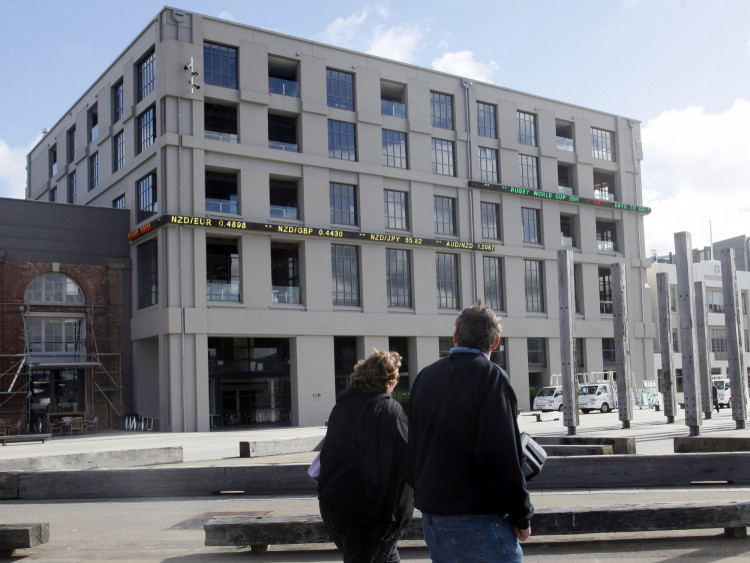
Currency markets were mostly steady save for the kiwi which climbed half a percent to a 19-month high after the Reserve Bank of New Zealand kept rates on hold, as expected, but sounded less dovish than forecast about the outlook.
Other currency and fixed income markets were mostly flat with traders unwilling to extend a selloff in the haven assets of bonds and the yen while the northern winter looms.
S&P 500 futures were even and Nasdaq 100 futures rose 0.4% after another session of Wall Street selling of hitherto soaring big technology firms.
"A rotation theme remains evident in equity markets," said National Australia Bank strategist Rodrigo Catril.
"Big technology, which has benefited from our virus-driven change in behavior, is now falling out of favor while small-cap stocks and those that have been most affected by social distancing restrictions have outperformed."
Amazon.com Inc. shares were also under pressure overnight after Europe authorities filed an antitrust suit against the online retailing giant. It has suffered its sharpest two-day drop since March, shedding 8%, though has gained 64% this year.
In Hong Kong on Wednesday the Hang Seng traded just below even as gains in financials were outweighed by losses in technology names such as Tencent and Alibaba.
In Tokyo, industrials led the charge as enthusiasm for buying airlines petered out.
In Australia banks made small gains while camping gear retailers, buy-now-pay-later darling Afterpay and Dominos Pizza extended losses.
The moves mirror a Wall Street rotation since Pfizer, Inc. announced Monday that its COVID-19 vaccine candidate, developed with German partner BioNTech, showed a 90% success rate in preventing infection during trials.
The blue chip Dow Jones, buoyed by industrial shares, is up nearly 4% this week, while the Nasdaq has lost almost that much and the S&P 500 is up 1%.
That came with a big selloff in U.S. Treasurys and the yen, even while COVID-19 deaths have crossed 300,000 in Europe and keep rising in spite of a second series of social restrictions as the northern autumn turns to winter.
"The rate of change that we've seen in the U.S. bond market over the last few days is just not sustainable," said Chris Weston, head of research at broker Pepperstone, who is looking for more easing from the U.S. Federal Reserve next month.
"Given the shaky patch that we know we've got to navigate through, which is going to be a very dark winter in the U.S...I just can't see a situation where the Fed doesn't do something to keep nominal bond yields in check."
Market participants are also looking to hear from European Central Bank President Christine Lagarde about the European economic outlook and stimulus prospects in a speech at 1300 GMT.
The U.S. bond market is shut for Veterans Day but the yield on benchmark 10-year Treasurys posted its highest close since March on Tuesday at 0.9720%.
Brent crude futures were last 30 cents firmer at $43.90 a barrel, just below a two-month high made overnight. Gold was steady at $1,879.36 an ounce.