China has imposed sweeping export restrictions on rare earth elements and other sensitive technologies destined for Japan, escalating a diplomatic dispute over Taiwan into a supply-chain confrontation with potential global repercussions. The move, announced by China's Ministry of Commerce, takes effect immediately and targets goods that could be used for military purposes, sharply raising pressure on Tokyo amid already strained relations.
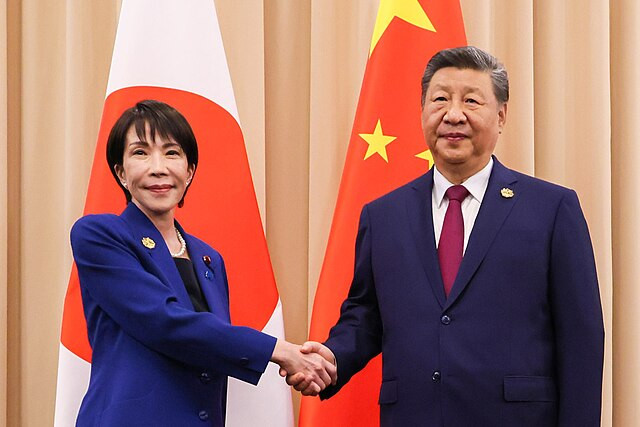
The ban follows remarks by Japanese Prime Minister Sanae Takaichi, who warned in parliament last year that a Chinese military action against Taiwan could amount to "a situation threatening Japan's survival." Beijing, which claims Taiwan as its territory despite never having ruled it, has condemned the comments as a violation of the one-China principle.
In a statement Tuesday, China's Ministry of Commerce said exports of "dual-use" items would be prohibited when destined for Japanese military end-users or for purposes that could enhance Japan's military capabilities. The ministry did not list specific products, but its published catalogue includes rare earths, advanced electronics, aerospace and aviation components, drones and nuclear-related technology.
"These comments constitute a crude interference in China's internal affairs, seriously violate the one-China principle and are extremely harmful in nature and impact," a ministry spokesperson said. The spokesperson added that the restrictions were imposed for "safeguarding national security and interests."
Rare earth elements are essential inputs across civilian and defense industries, from electric vehicles and wind turbines to precision-guided weapons and fighter jets. China dominates the global rare earth supply chain, holding near-monopoly power in the mining and refining of several heavy rare earths, giving Beijing significant leverage in geopolitical disputes.
Since last year, China has steadily expanded export controls on rare earths. In April, it imposed restrictions on seven elements, including samarium, gadolinium, terbium, dysprosium and yttrium. In October, it added five more-holmium, erbium, thulium, europium and ytterbium-materials widely used in advanced electronics and military systems.
The ministry warned that indirect transactions through third countries would also be blocked. Any organization or individual transferring restricted Chinese-origin goods to Japanese entities would face legal consequences, a signal analysts interpret as a secondary-boycott threat.
The restrictions represent the sharpest escalation in Beijing's response since November, when Takaichi told lawmakers that a naval blockade or use of armed force against Taiwan could constitute a threat to Japan's existence. Although she later said, "I will reflect on the parts that were perceived as exceeding the government's existing stance," China has continued to demand a full retraction.
Beijing has already applied pressure through non-trade measures, including cutting flights, warning Chinese citizens against traveling to or studying in Japan, and suspending Japanese seafood imports. The rare earth move marks the first time the dispute has spilled directly into strategic supply chains and technology controls.
The episode revives memories of 2010, when China restricted rare earth shipments to Japan during a standoff over the Senkaku Islands, known in China as Diaoyu Dao. Then, as now, the measures disrupted Japanese manufacturers and underscored China's willingness to weaponize control over critical resources.