Brett Wattles

The Latest
-
Trump Pressured FDA to Approve Candy-Flavoured Vapes as Gen Z Approval Slumped to 24%, Report Says
Donald Trump privately pressured the U.S. Food and Drug Administration to accelerate approval of fruit-flavoured vaping products as his standing with younger voters deteriorated sharply, according to new reporting that has intensified scrutiny over political influence inside the federal regulatory system. 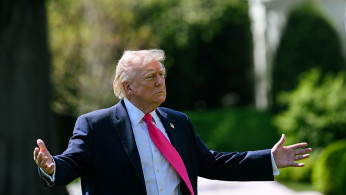
Donald Trump privately pressured the U.S. Food and Drug Administration to accelerate approval of fruit-flavoured vaping products as his standing with younger voters deteriorated sharply, according to new reporting that has intensified scrutiny over political influence inside the federal regulatory system. -
Trump Signals UFO File Release as Pilots’ ‘Unbelievable’ Sightings Enter Policy Spotlight
Donald Trump said his administration is preparing to release long-classified records related to unidentified aerial phenomena, telling reporters that U.S. military pilots "saw things you wouldn't believe" as the White House moves toward broader disclosure. 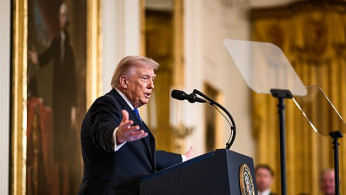
Donald Trump said his administration is preparing to release long-classified records related to unidentified aerial phenomena, telling reporters that U.S. military pilots "saw things you wouldn't believe" as the White House moves toward broader disclosure. -
Prince William Warns King Charles of ‘Disaster’ if Harry Returns as Royal Rift Deepens
Prince William has privately warned King Charles III against any move to reintegrate Prince Harry and Meghan Markle into royal duties, with aides describing the potential return as a "disaster" that could further destabilize the monarchy at a sensitive moment. 
Prince William has privately warned King Charles III against any move to reintegrate Prince Harry and Meghan Markle into royal duties, with aides describing the potential return as a "disaster" that could further destabilize the monarchy at a sensitive moment. -
Trump Cognitive Health Debate Intensifies as Psychologist Alleges ‘Cover-Up’ and White House Faces Scrutiny
Allegations about the cognitive health of Donald Trump have resurfaced with renewed intensity, after psychologist John Gartner publicly claimed that the White House is concealing signs of potential decline-assertions that have fueled political debate but remain unverified by medical evidence or official disclosure. 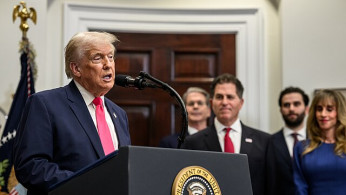
Allegations about the cognitive health of Donald Trump have resurfaced with renewed intensity, after psychologist John Gartner publicly claimed that the White House is concealing signs of potential decline-assertions that have fueled political debate but remain unverified by medical evidence or official disclosure. -
Report: Kristi Noem Approved $1 Billion Border Wall Contracts to Firm Accused of Hiring Armed Migrants
The Department of Homeland Security under former Secretary Kristi Noem approved $1 billion in border wall construction contracts to a Texas firm previously accused in court filings of employing undocumented migrants and arming them as security guards, raising fresh scrutiny over federal contracting practices tied to President Donald Trump's border security agenda. 
The Department of Homeland Security under former Secretary Kristi Noem approved $1 billion in border wall construction contracts to a Texas firm previously accused in court filings of employing undocumented migrants and arming them as security guards, raising fresh scrutiny over federal contracting practices tied to President Donald Trump's border security agenda. -
Trump Questions Corey Lewandowski’s Role in $220M DHS Ad Campaign as Lawmakers Probe No-Bid Contracts
President Donald Trump has begun questioning aides about longtime political adviser Corey Lewandowski's role in a roughly $220 million Department of Homeland Security advertising campaign that prominently featured former DHS Secretary Kristi Noem, according to people familiar with internal White House discussions. 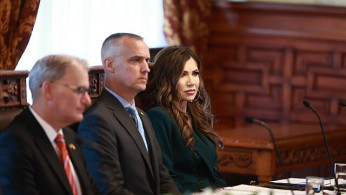
President Donald Trump has begun questioning aides about longtime political adviser Corey Lewandowski's role in a roughly $220 million Department of Homeland Security advertising campaign that prominently featured former DHS Secretary Kristi Noem, according to people familiar with internal White House discussions. -
Trump White House Presses Pentagon on UFO Access as Lawmaker Claims President ‘Fully Briefed’ on Aliens
The Trump White House has quietly pushed the Pentagon to accommodate congressional requests for access to highly restricted sites linked to longstanding UFO claims, according to a Republican lawmaker who says President Donald Trump has been "fully briefed" on allegations involving recovered craft and non-human life. 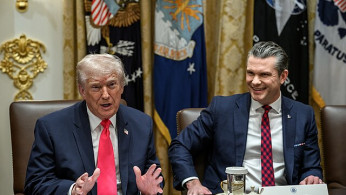
The Trump White House has quietly pushed the Pentagon to accommodate congressional requests for access to highly restricted sites linked to longstanding UFO claims, according to a Republican lawmaker who says President Donald Trump has been "fully briefed" on allegations involving recovered craft and non-human life. -
Measles Cases Confirmed at Texas ICE Facility as Lawmakers Warn of Rapid Spread Among Detained Children
Two children have been confirmed with measles inside a large immigration detention center in Texas, triggering urgent warnings from health experts and lawmakers that the highly contagious virus could spread rapidly among hundreds of detained families. The cases were identified at the South Texas Family Residential Center, a facility operated under Immigration and Customs Enforcement, according to officials briefed on the situation. 
Two children have been confirmed with measles inside a large immigration detention center in Texas, triggering urgent warnings from health experts and lawmakers that the highly contagious virus could spread rapidly among hundreds of detained families. The cases were identified at the South Texas Family Residential Center, a facility operated under Immigration and Customs Enforcement, according to officials briefed on the situation. -
NASA Tracks Ancient Interstellar Comet 3I/ATLAS After Perihelion Brightening and Rare Chemical Signals
Scientists at NASA are intensifying observations of a massive interstellar comet that briefly vanished behind the Sun before reappearing brighter than expected, underscoring the growing scientific interest in a visitor believed to be billions of years older than the solar system. The object, known as 3I/ATLAS, reached perihelion on Oct. 29 after a high-speed plunge toward the Sun, prompting coordinated monitoring across space- and ground-based observatories. 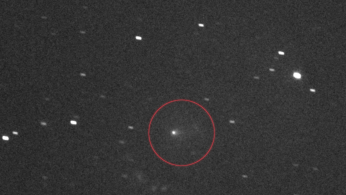
Scientists at NASA are intensifying observations of a massive interstellar comet that briefly vanished behind the Sun before reappearing brighter than expected, underscoring the growing scientific interest in a visitor believed to be billions of years older than the solar system. The object, known as 3I/ATLAS, reached perihelion on Oct. 29 after a high-speed plunge toward the Sun, prompting coordinated monitoring across space- and ground-based observatories. -
NASA Confirms 3I/ATLAS Is a Natural Interstellar Comet, Ending Alien Spacecraft Claims
NASA has formally concluded that 3I/ATLAS, the third confirmed interstellar object ever detected passing through the solar system, is a naturally occurring comet, bringing months of speculation about extraterrestrial technology to a close as the object continues its outbound journey into deep space. 
NASA has formally concluded that 3I/ATLAS, the third confirmed interstellar object ever detected passing through the solar system, is a naturally occurring comet, bringing months of speculation about extraterrestrial technology to a close as the object continues its outbound journey into deep space.
