Brett Wattles

The Latest
-
RFK Jr.’s CDC Scrambles for Airport Ebola Volunteers After Mass Layoffs Gut Outbreak Response Teams
The Centers for Disease Control and Prevention has begun urgently recruiting volunteer airport screeners as a rapidly expanding Ebola outbreak in Central Africa pushes past 1,000 suspected and confirmed cases, exposing the strain on a public-health agency that has undergone sweeping workforce cuts under Health Secretary Robert F. Kennedy Jr.. 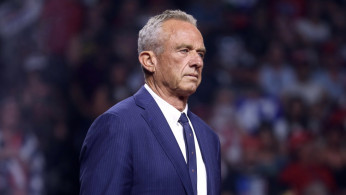
The Centers for Disease Control and Prevention has begun urgently recruiting volunteer airport screeners as a rapidly expanding Ebola outbreak in Central Africa pushes past 1,000 suspected and confirmed cases, exposing the strain on a public-health agency that has undergone sweeping workforce cuts under Health Secretary Robert F. Kennedy Jr.. -
WHO Raises Congo Ebola Risk to ‘Very High’ as Cases Climb to 82 and Death Toll Reaches 7
World Health Organization warned Friday that the worsening Ebola outbreak in Democratic Republic of the Congo now poses a "very high" national risk after confirmed infections climbed to 82 cases and at least seven confirmed deaths, raising fears of broader transmission across eastern and central Africa. 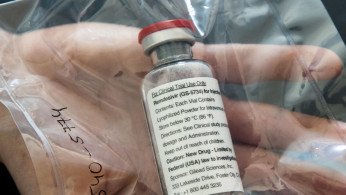
World Health Organization warned Friday that the worsening Ebola outbreak in Democratic Republic of the Congo now poses a "very high" national risk after confirmed infections climbed to 82 cases and at least seven confirmed deaths, raising fears of broader transmission across eastern and central Africa. -
Hawaii Hit by Magnitude 6.0 Earthquake Near Mauna Loa as Officials Rule Out Tsunami and Eruption
A powerful magnitude 6.0 earthquake struck near Mauna Loa on Hawaii's Big Island late Friday night, rattling communities across the island chain, triggering rockslides and briefly sparking fears of a volcanic eruption and tsunami before federal and state officials moved quickly to reassure residents that neither threat had materialized. 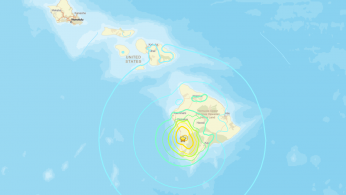
A powerful magnitude 6.0 earthquake struck near Mauna Loa on Hawaii's Big Island late Friday night, rattling communities across the island chain, triggering rockslides and briefly sparking fears of a volcanic eruption and tsunami before federal and state officials moved quickly to reassure residents that neither threat had materialized. -
Trump’s ‘Eight Wars’ Boast Fuels Cognitive Decline Speculation as Doctors Call Him ‘Mentally Unfit’
Donald Trump is facing renewed scrutiny over his physical and cognitive health after claiming he had "settled eight wars," a remark that triggered backlash online and intensified an already heated debate surrounding the president's fitness for office. 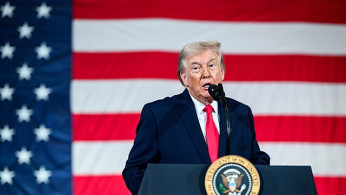
Donald Trump is facing renewed scrutiny over his physical and cognitive health after claiming he had "settled eight wars," a remark that triggered backlash online and intensified an already heated debate surrounding the president's fitness for office. -
Pentagon Says More UFO Files Are Coming as 1 Billion Users Flood New UAP Disclosure Website
The United States Department of Defense said additional declassified UFO files are being prepared for release just weeks after its first public dump of unidentified anomalous phenomena records triggered intense global attention and drove more than one billion visitors to a newly launched government disclosure website. 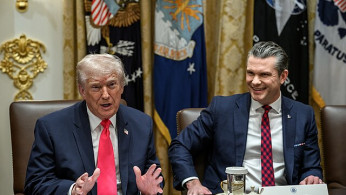
The United States Department of Defense said additional declassified UFO files are being prepared for release just weeks after its first public dump of unidentified anomalous phenomena records triggered intense global attention and drove more than one billion visitors to a newly launched government disclosure website. -
Donald Trump Appears With Concealer-Covered Hand as Swelling Questions Intensify After Coast Guard Speech
Donald Trump appeared in public Wednesday with his visibly bruised and swollen right hand heavily covered in beige concealer, reigniting scrutiny over the president's health just hours after a lengthy and at times disjointed commencement address at the United States Coast Guard Academy. 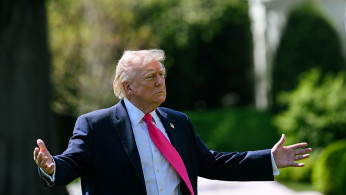
Donald Trump appeared in public Wednesday with his visibly bruised and swollen right hand heavily covered in beige concealer, reigniting scrutiny over the president's health just hours after a lengthy and at times disjointed commencement address at the United States Coast Guard Academy. -
RFK Jr. Targets Antidepressant Use as MAHA Initiative Sparks Mental Health Backlash
Robert F. Kennedy Jr. is opening a new front in the Trump administration's healthcare agenda, launching a campaign against what he describes as the "overuse" of antidepressants and psychiatric medication while drawing sharp concern from psychiatrists who warn the rhetoric could deepen mistrust around mental healthcare in the United States. 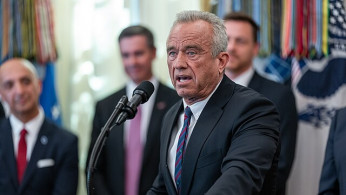
Robert F. Kennedy Jr. is opening a new front in the Trump administration's healthcare agenda, launching a campaign against what he describes as the "overuse" of antidepressants and psychiatric medication while drawing sharp concern from psychiatrists who warn the rhetoric could deepen mistrust around mental healthcare in the United States. -
Newly Released Apollo 17 UFO Files Revive ‘Never Return to the Moon’ Alien Theory
The final mission that put humans on the Moon is once again at the center of America's UFO debate after newly released Pentagon UAP files revealed a series of unexplained sightings reported by Apollo 17 astronauts during the December 1972 mission - alongside renewed claims that the crew may have received a warning from extraterrestrials to "never return." 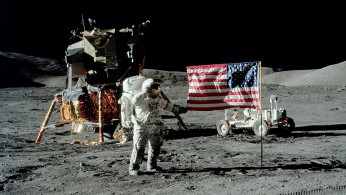
The final mission that put humans on the Moon is once again at the center of America's UFO debate after newly released Pentagon UAP files revealed a series of unexplained sightings reported by Apollo 17 astronauts during the December 1972 mission - alongside renewed claims that the crew may have received a warning from extraterrestrials to "never return." -
White House Begins Releasing ‘Alien Files’ as UFO Disclosure Debate Reaches Congress and Churches
The White House is set to begin releasing a first tranche of long-awaited "alien files" on Friday, according to Republican lawmakers involved in a federal declassification effort that has pulled the Pentagon, FBI and Congress deeper into the politically charged debate over unidentified flying objects and extraterrestrial life. The White House is set to begin releasing a first tranche of long-awaited "alien files" on Friday, according to Republican lawmakers involved in a federal declassification effort that has pulled the Pentagon, FBI and Congress deeper into the politically charged debate over unidentified flying objects and extraterrestrial life. -
Lawmakers Question Witness Over Claims Aborted Baby Parts Were Implanted Into Lab Animals Via Fauci's NIAID Grants
A resurfaced congressional hearing featuring Lauren Boebert, former Anthony Fauci and the National Institute of Allergy and Infectious Diseases has reignited debate over taxpayer-funded fetal tissue research after witnesses alleged that Fauci's agency financed the overwhelming majority of National Institutes of Health experiments involving the implantation of human fetal tissue into laboratory animals. 
A resurfaced congressional hearing featuring Lauren Boebert, former Anthony Fauci and the National Institute of Allergy and Infectious Diseases has reignited debate over taxpayer-funded fetal tissue research after witnesses alleged that Fauci's agency financed the overwhelming majority of National Institutes of Health experiments involving the implantation of human fetal tissue into laboratory animals.
